
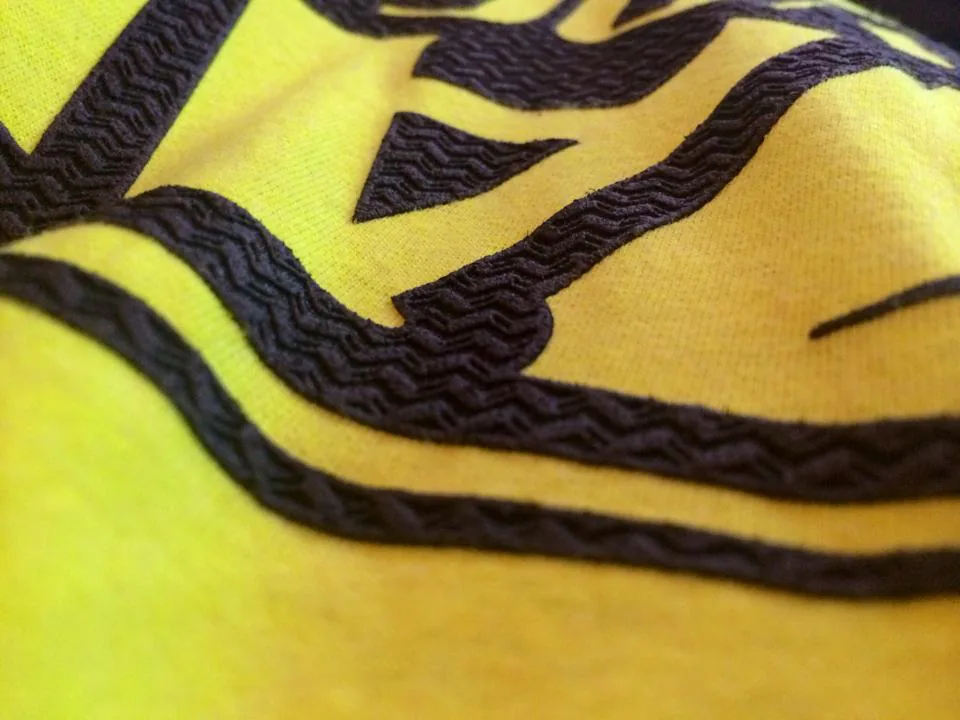
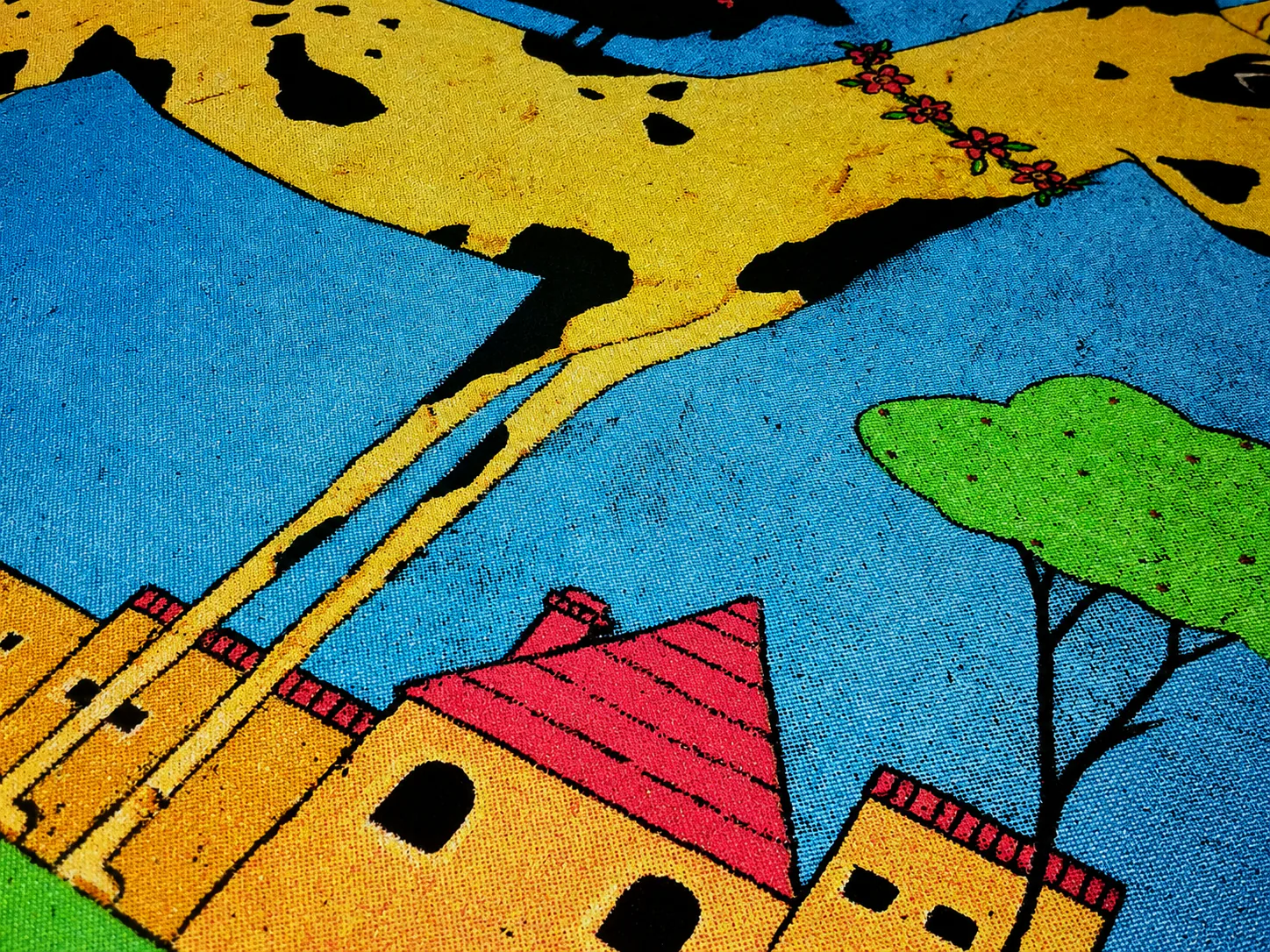
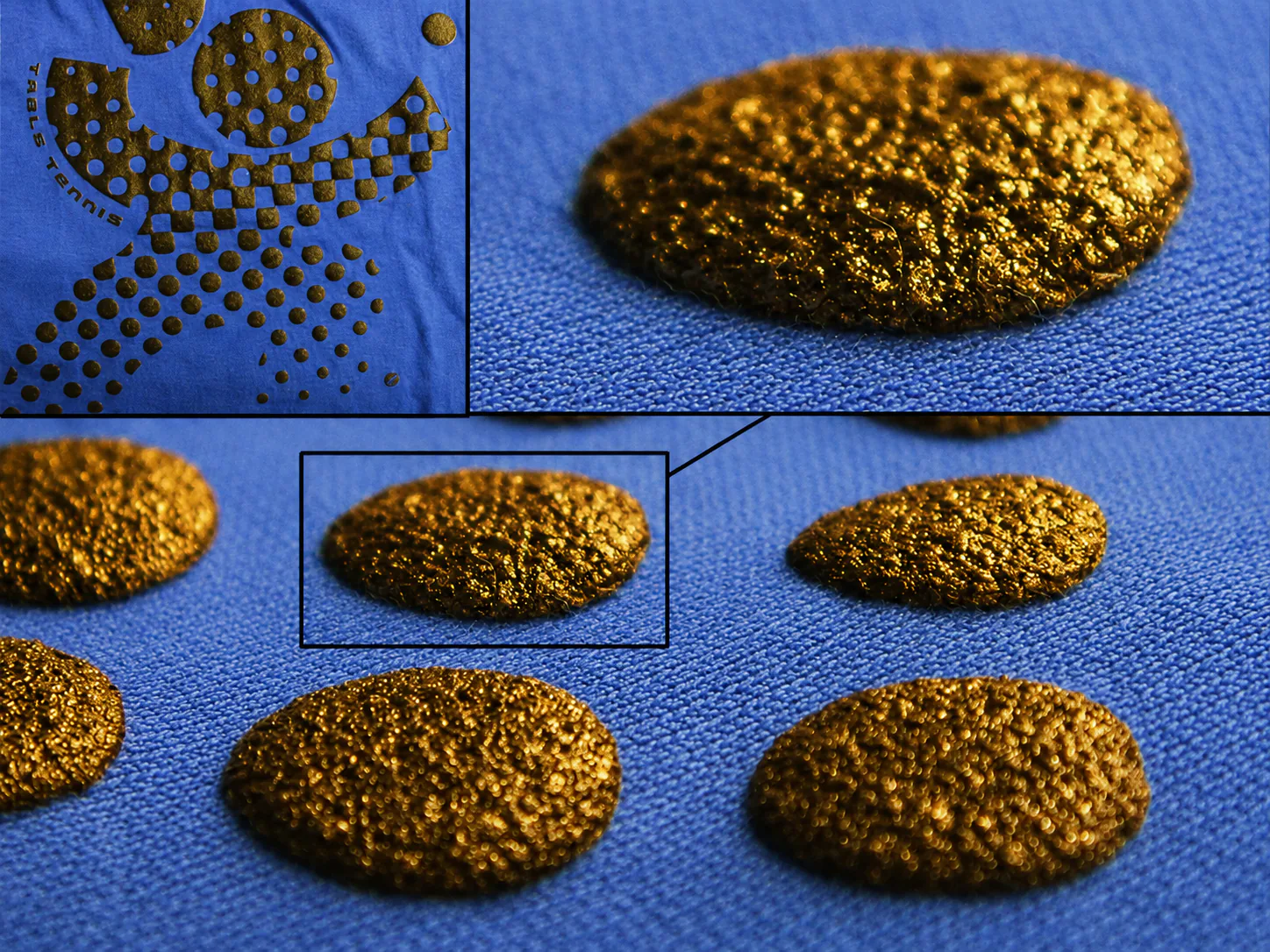

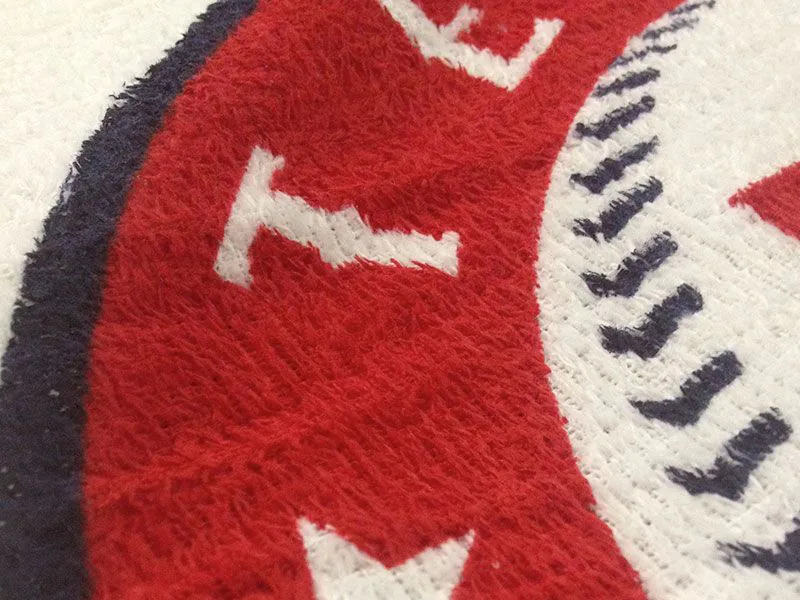
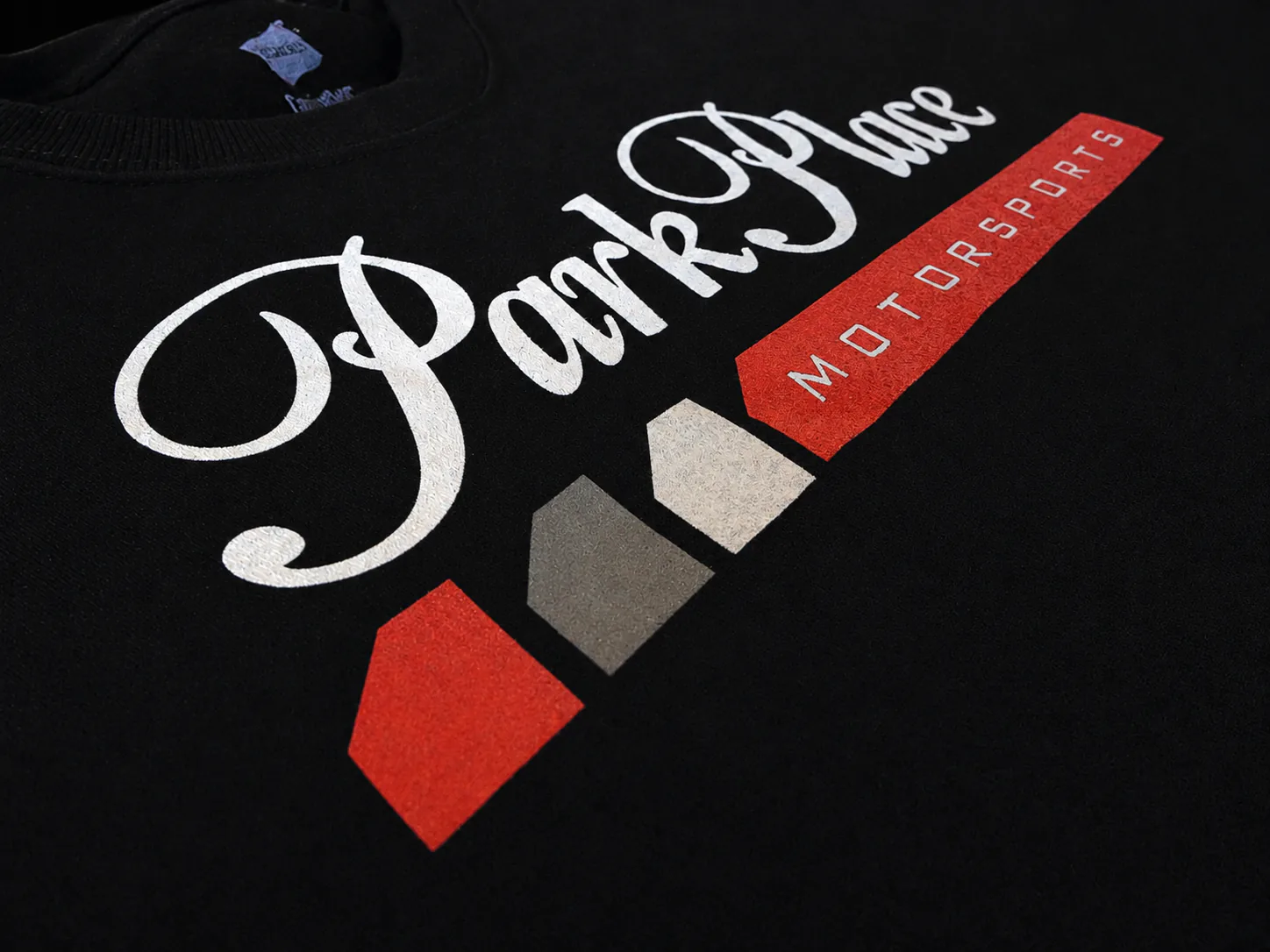
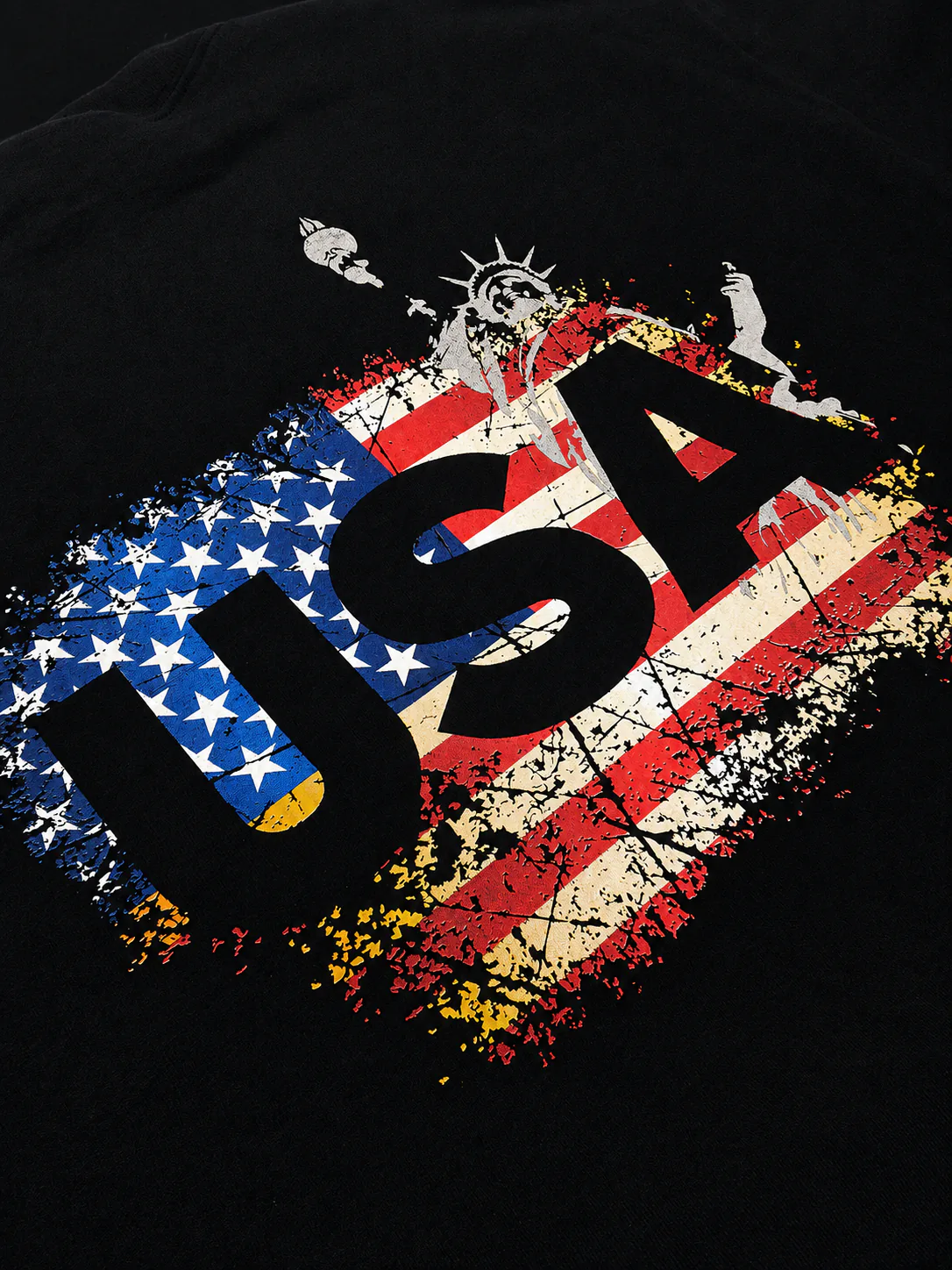
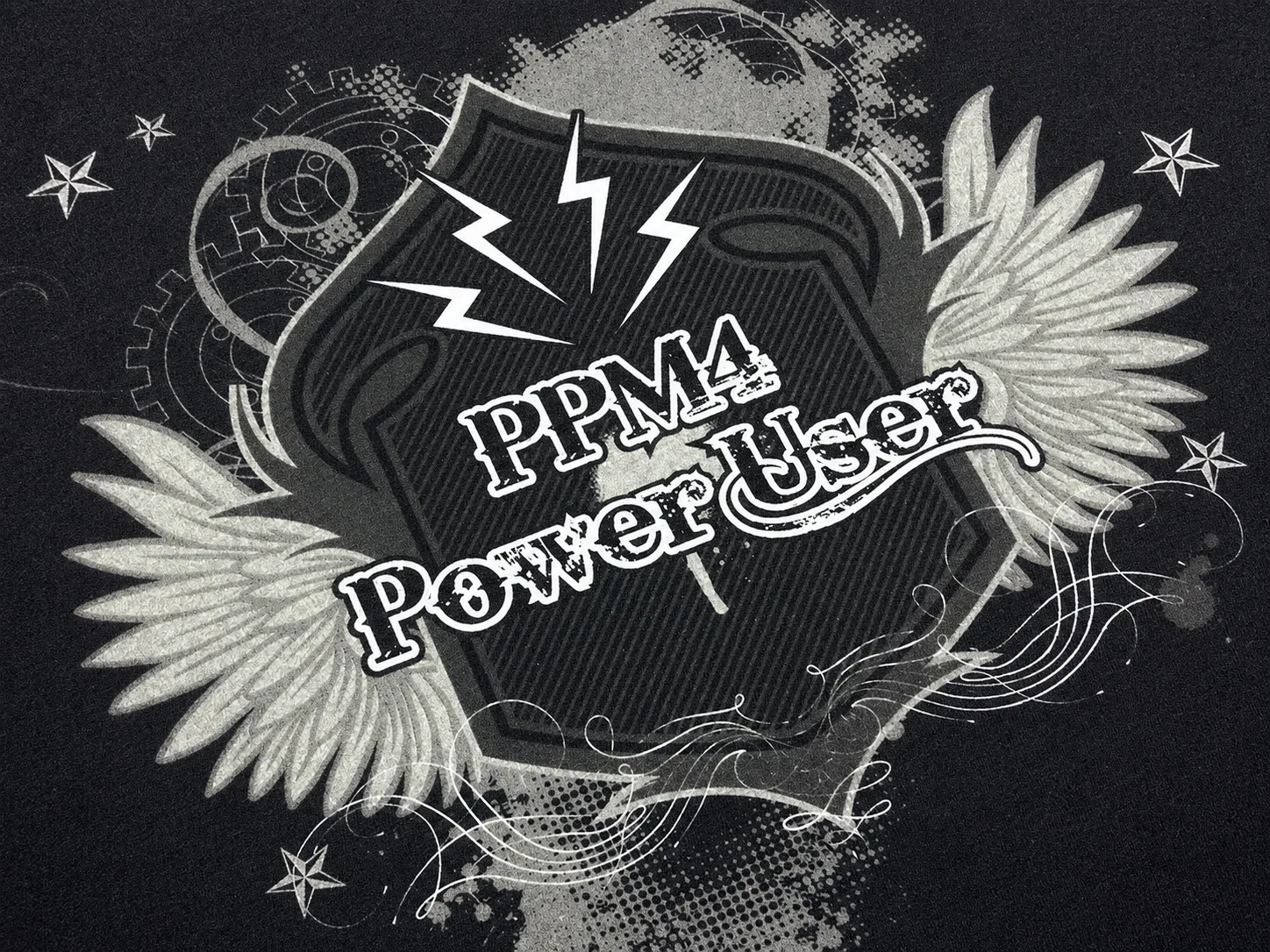
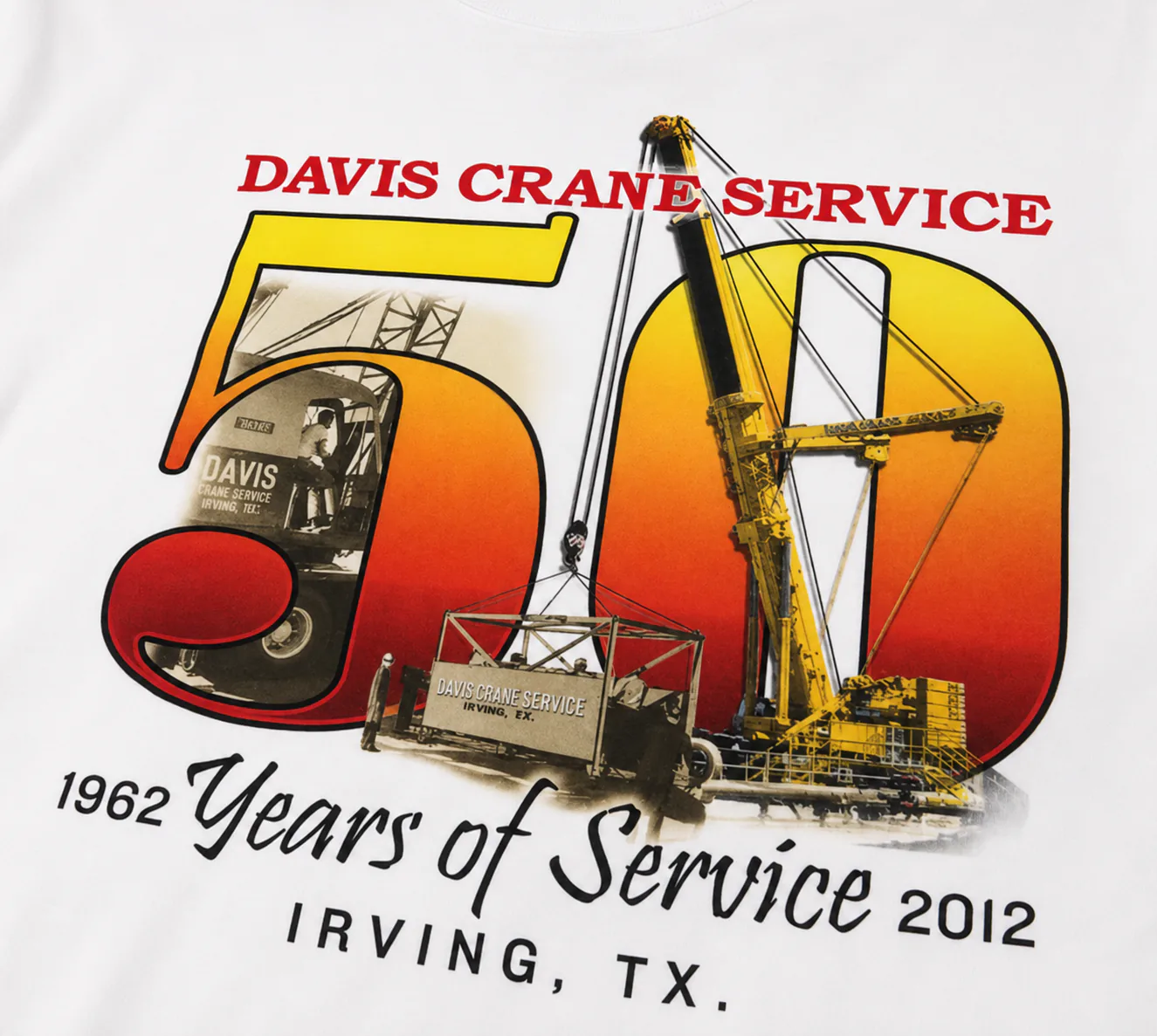
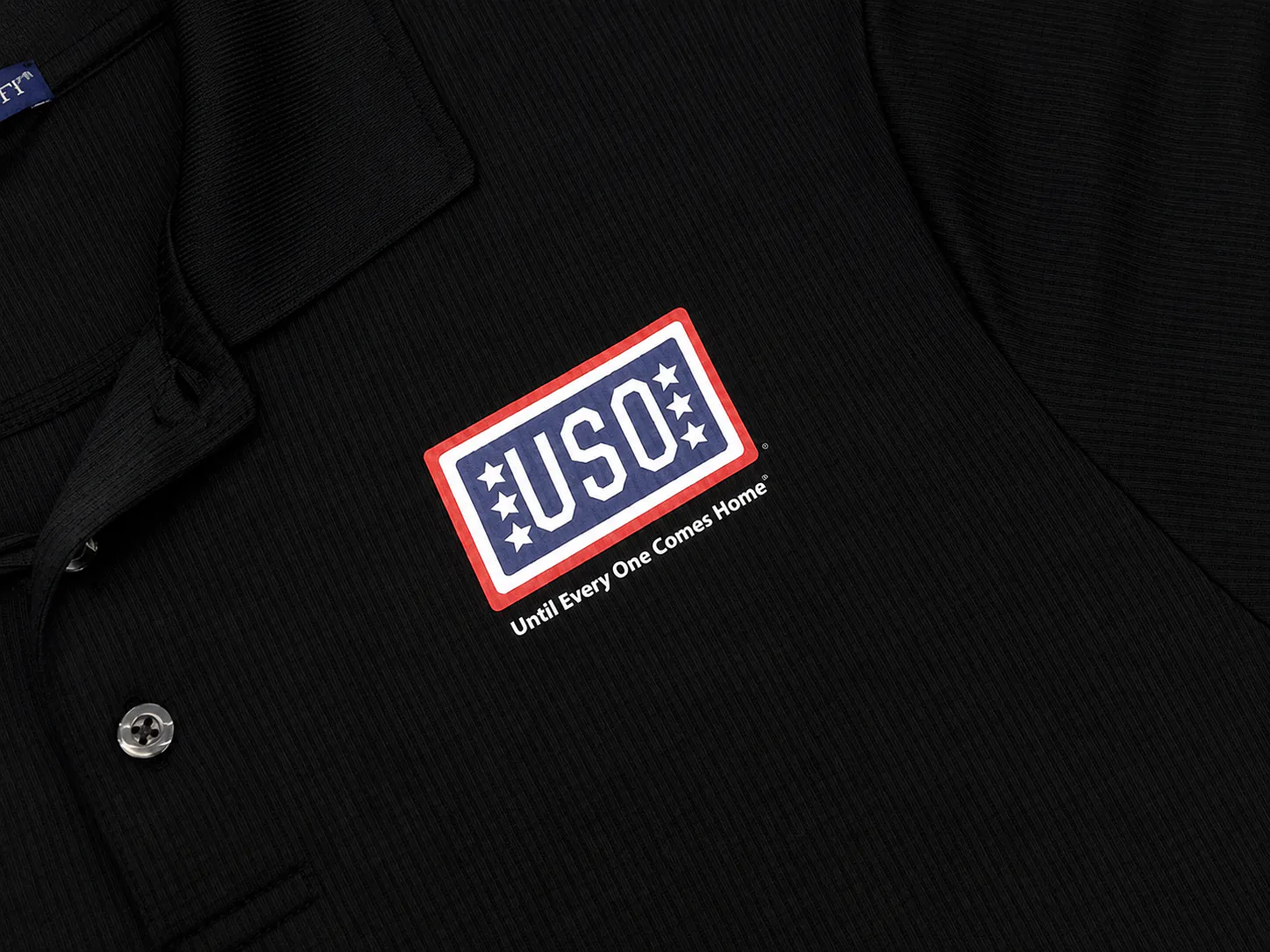
Spot color and standard production
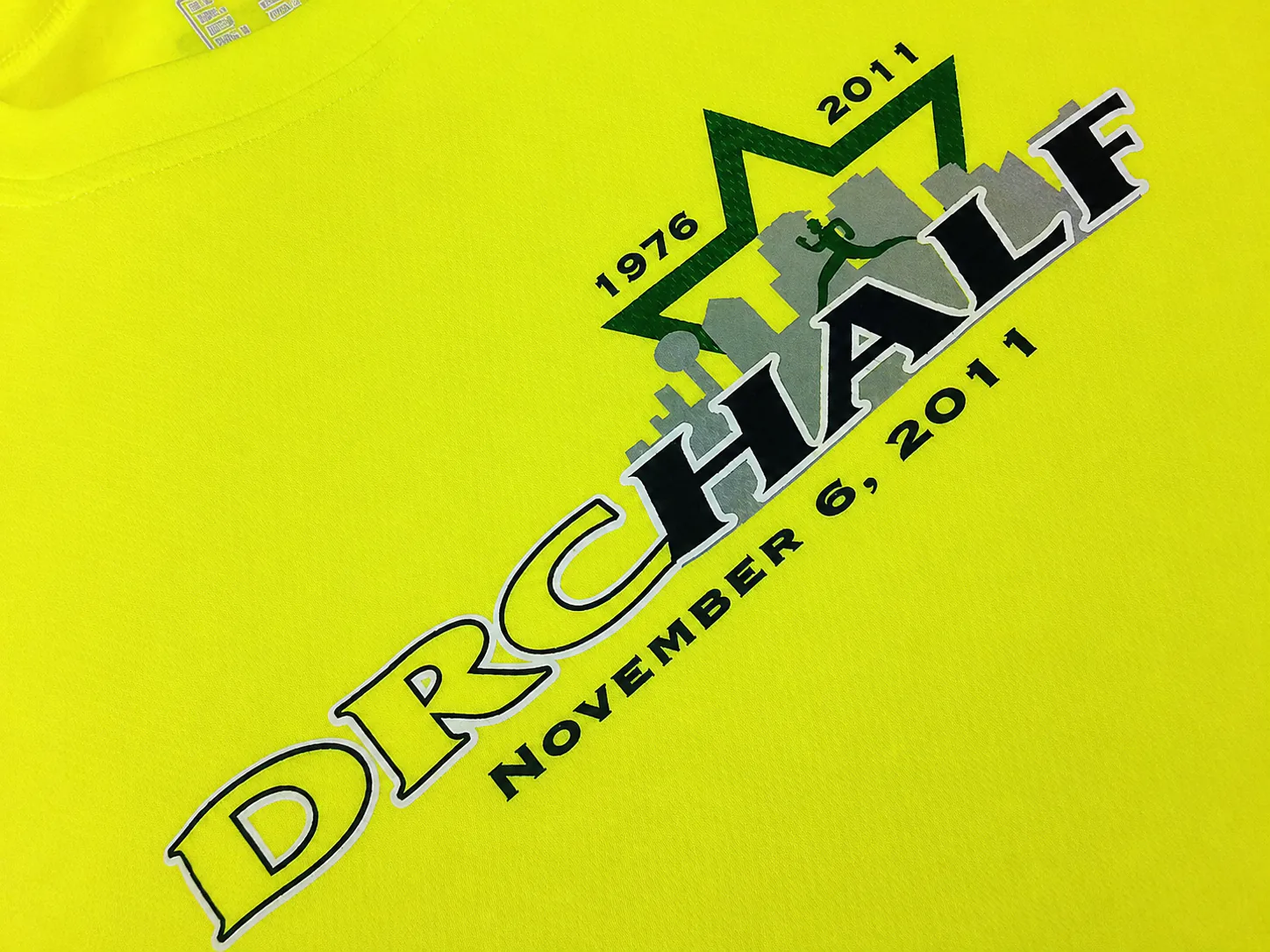
Repeatable color, placement, garment loading, and production controls for everyday contract and program work.
Screen-printing production
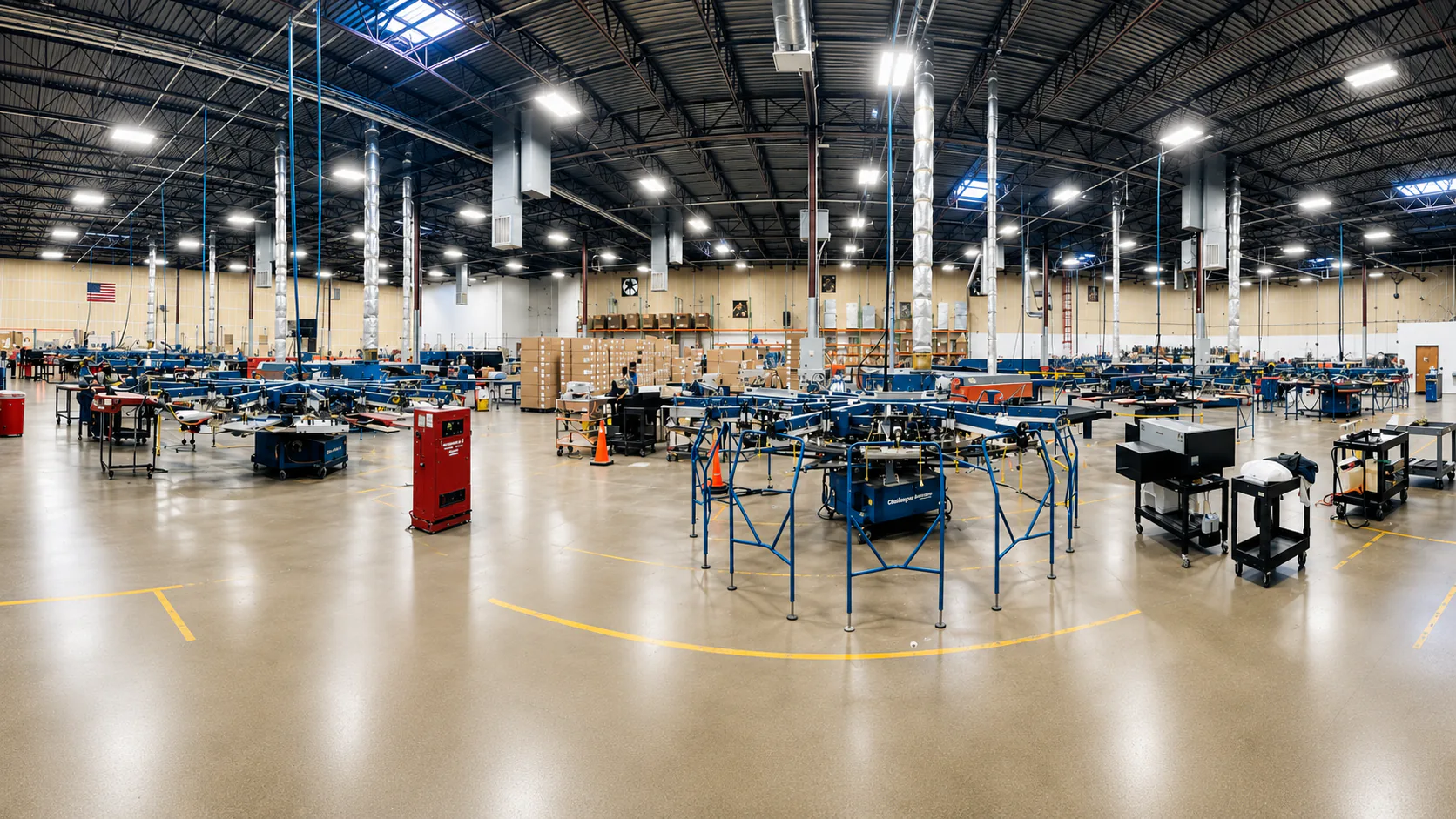
Ten automatic screen-printing machines, direct laser-to-screen exposure, automatic reclaim, specialty inks, and finishing support complex work and repeatable production for contract customers, brands, distributors, and established organizations.
Inside the operation
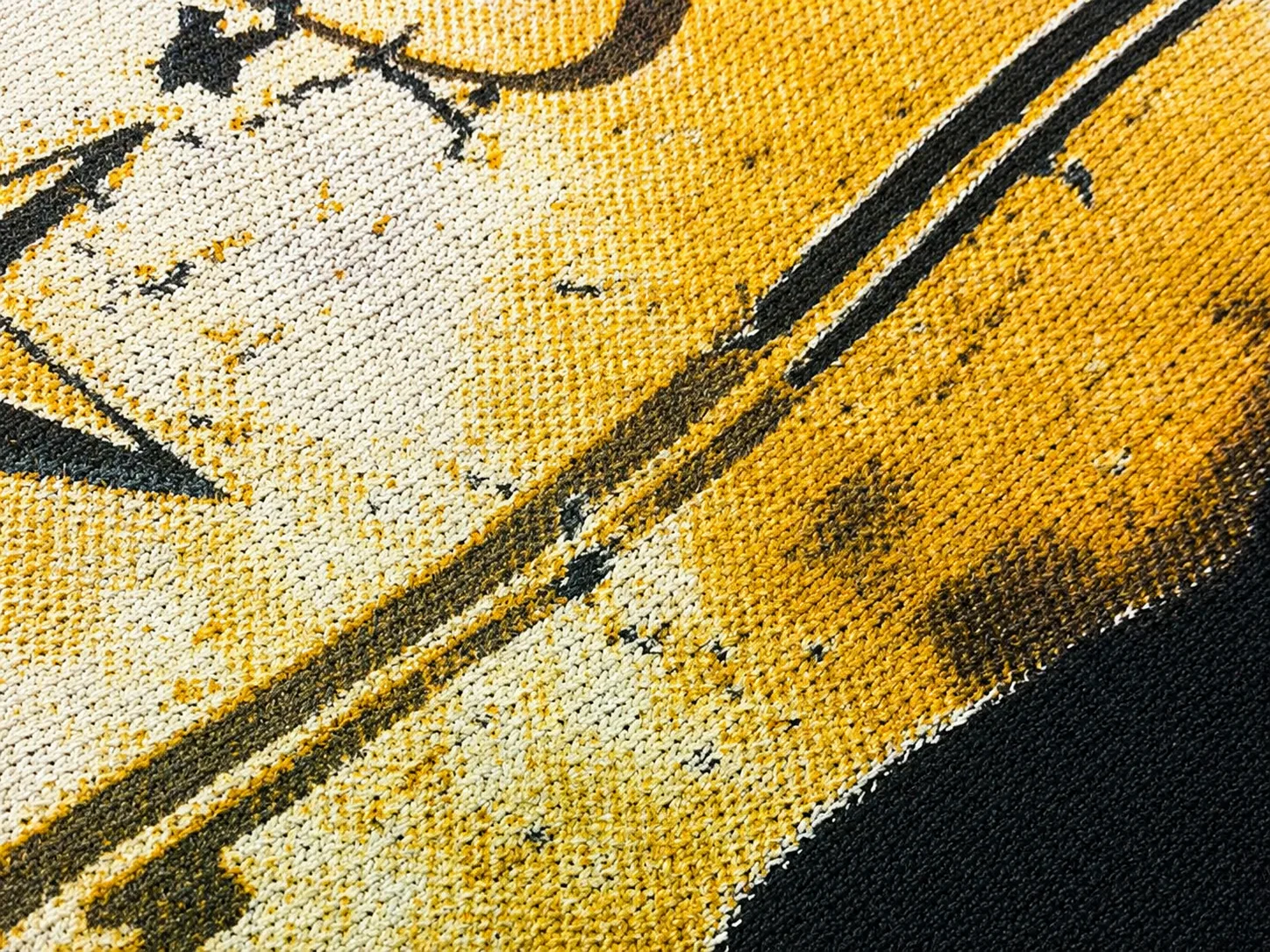
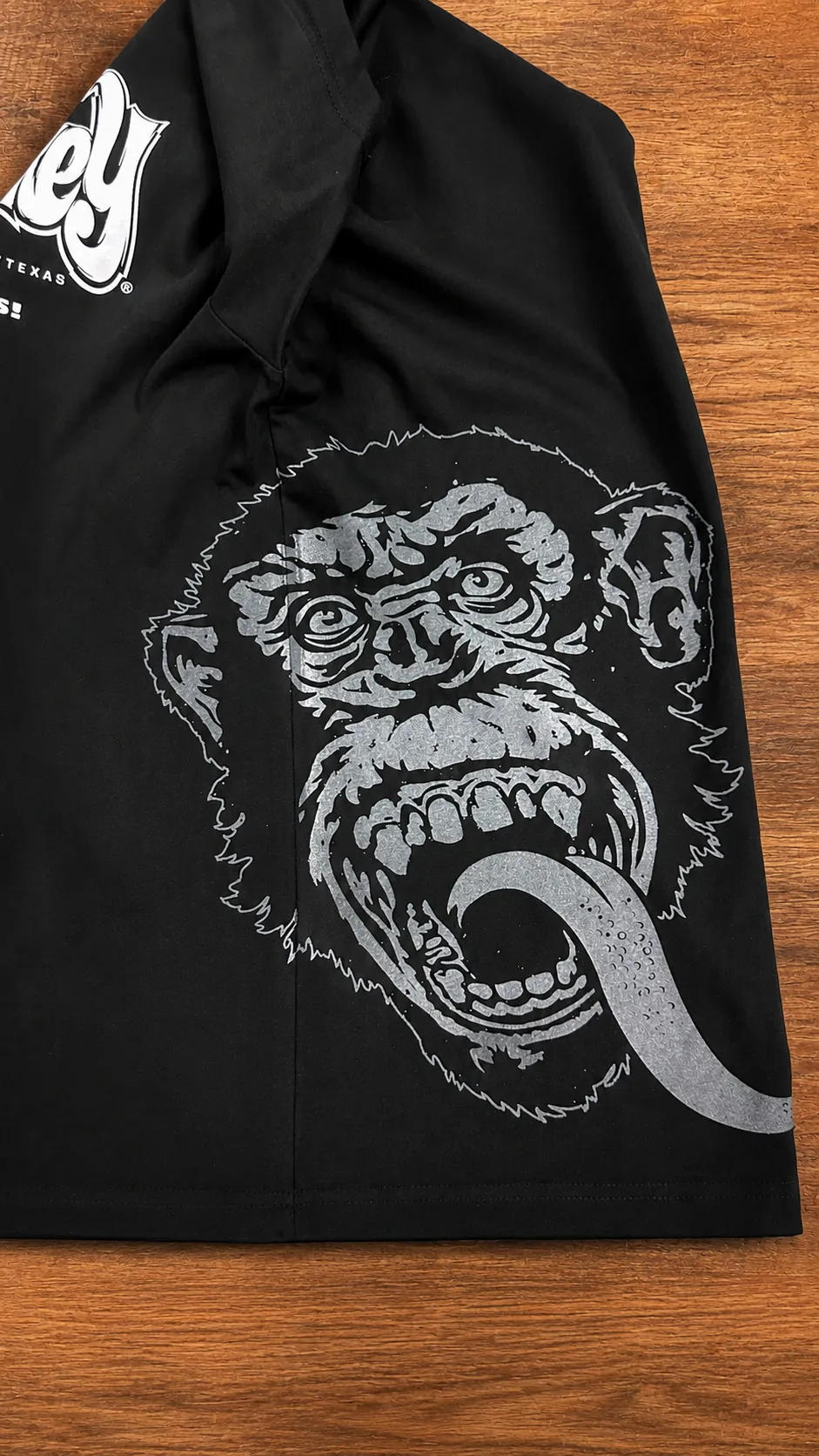
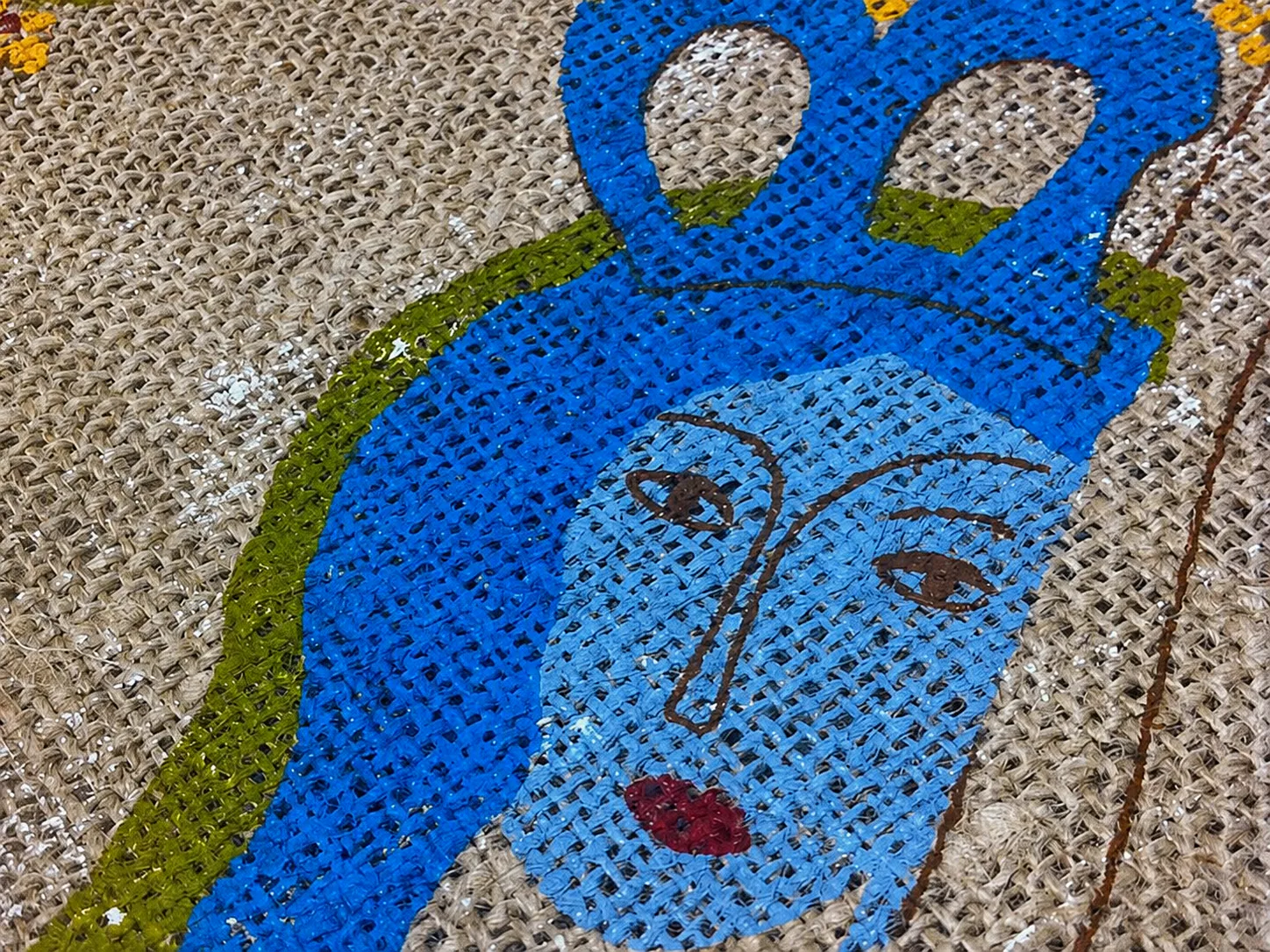
Selected views from the equipment, finishing, inventory, and workflows connected to this work.
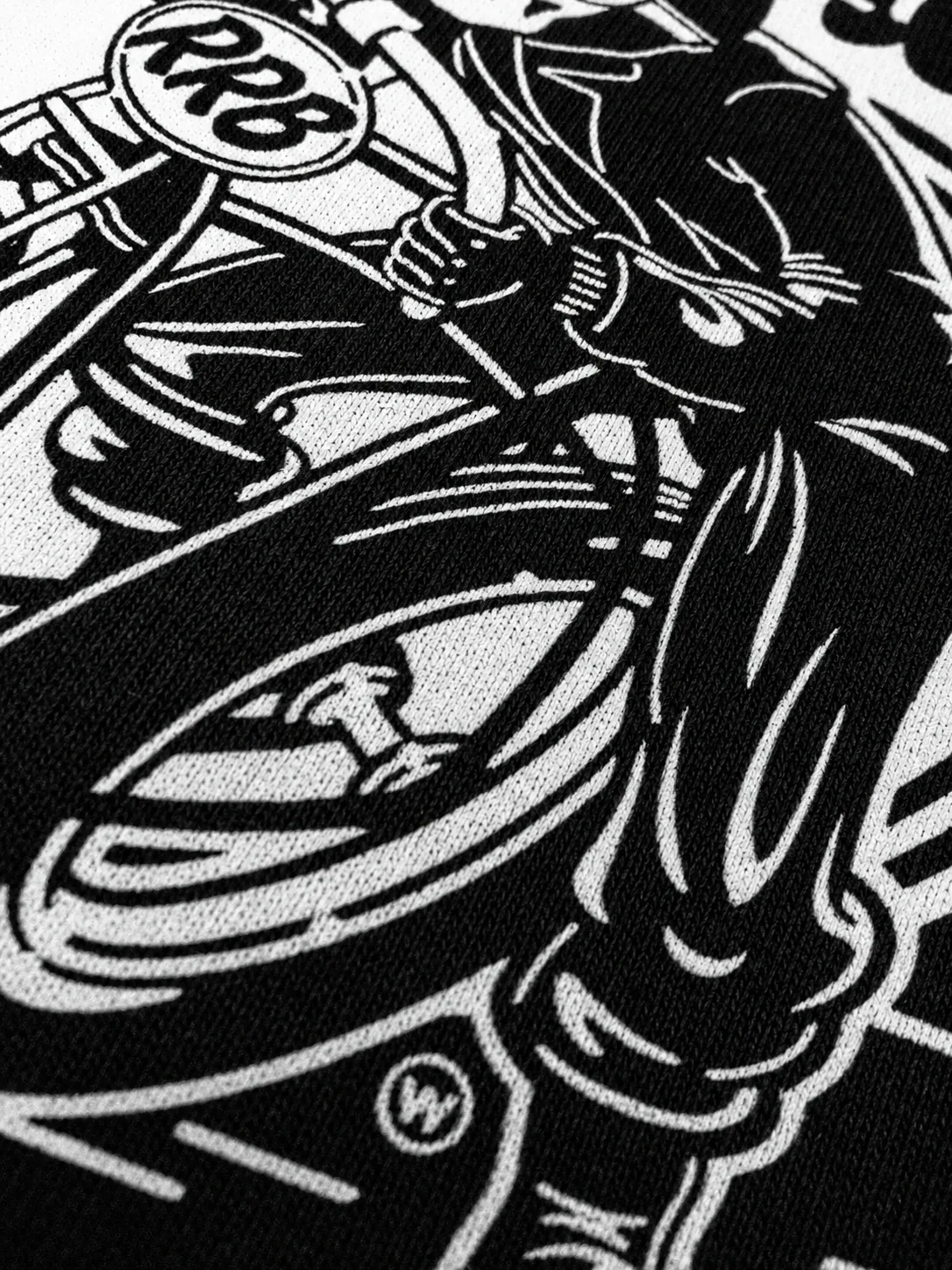
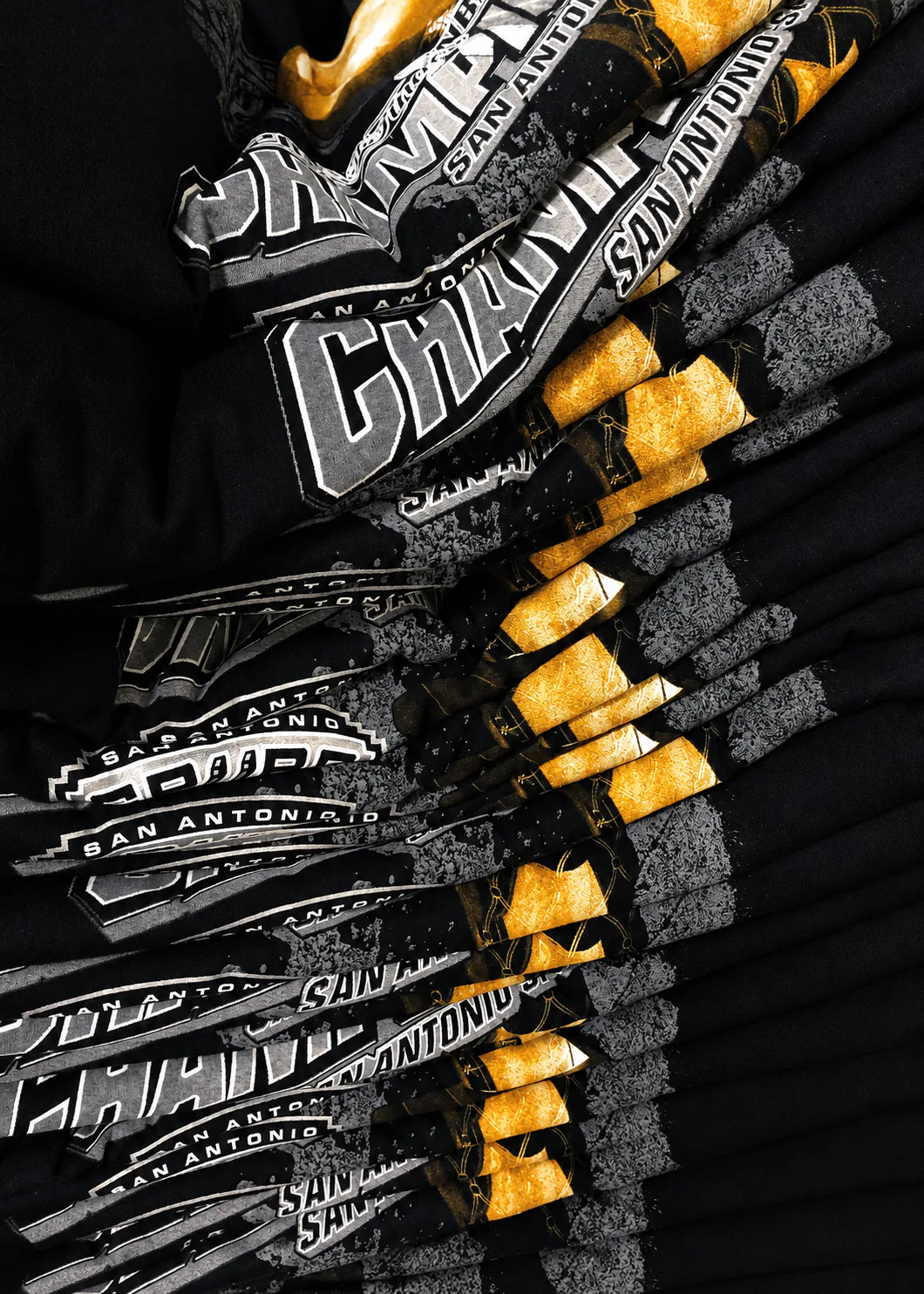
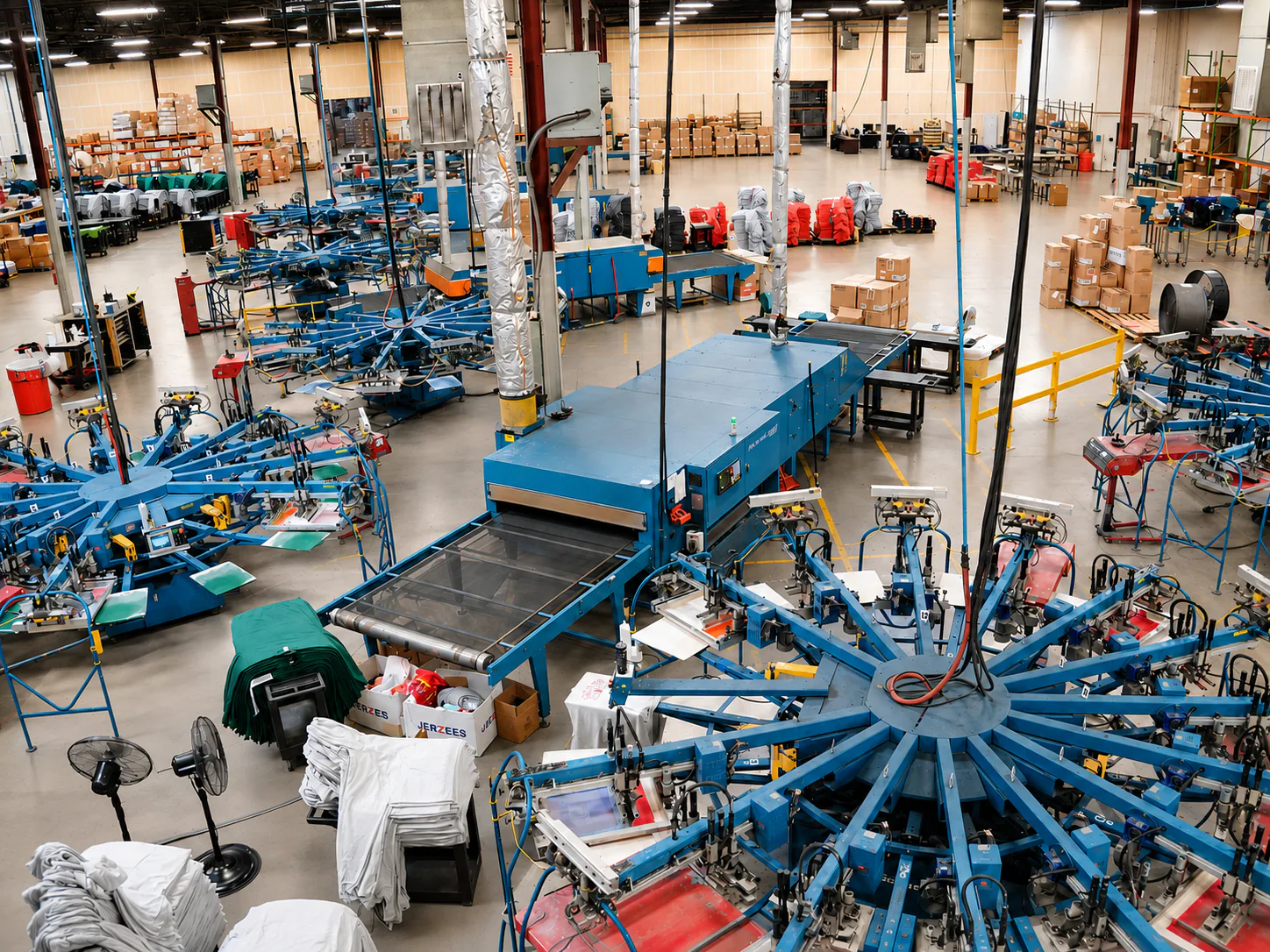 High-capacity screen printing built for production at scale.
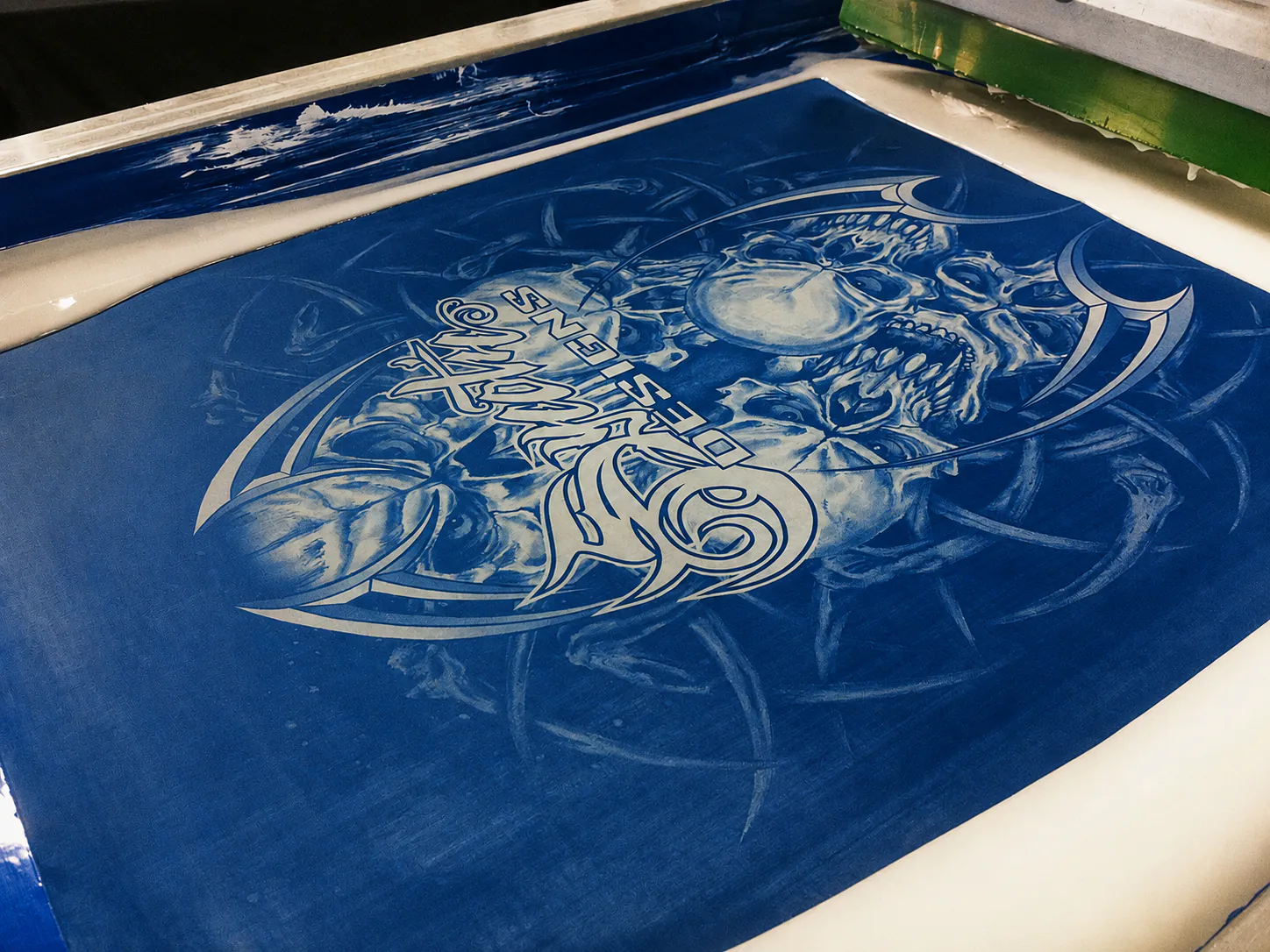
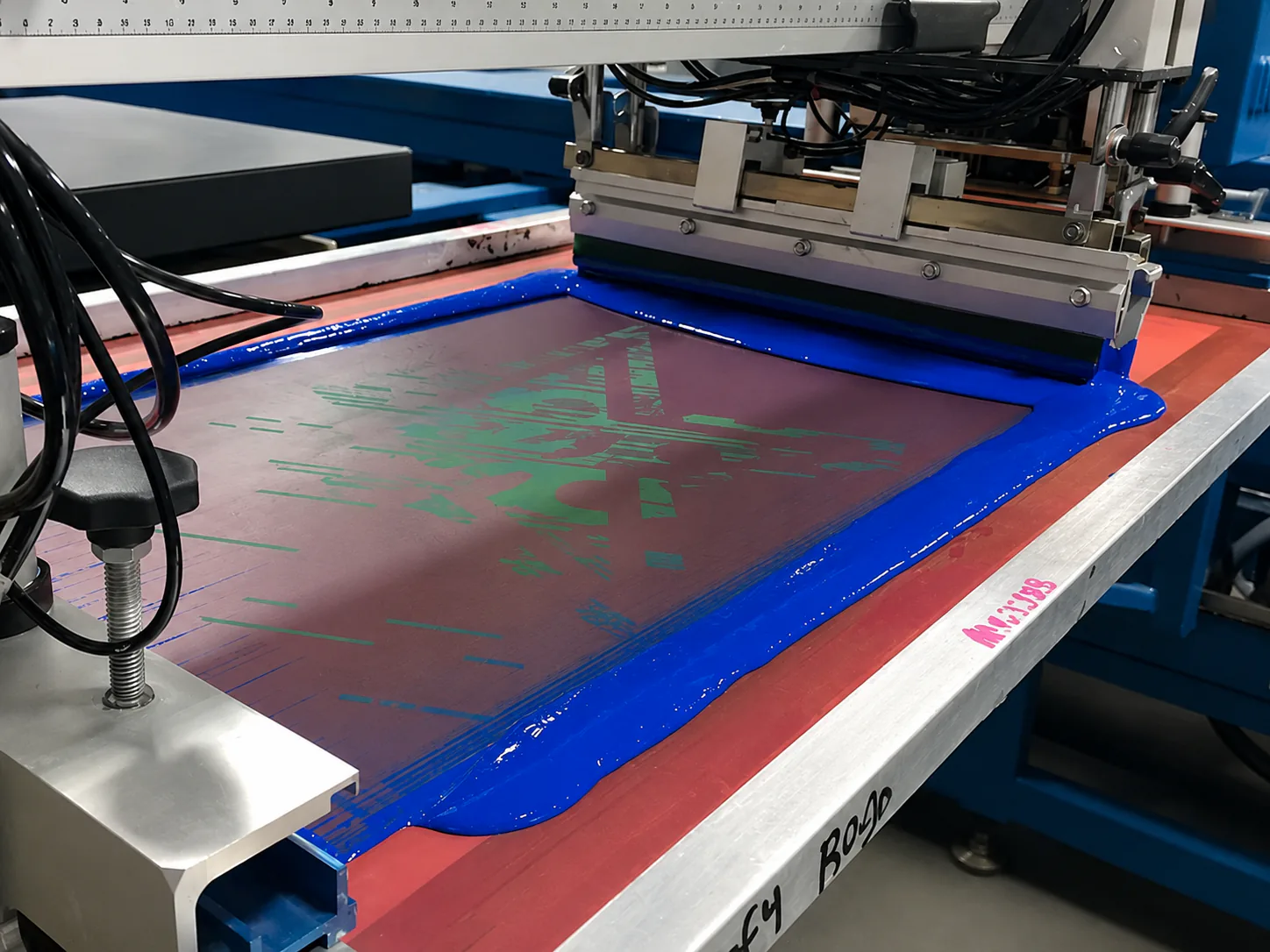 Ink and press control during screen-printing production.
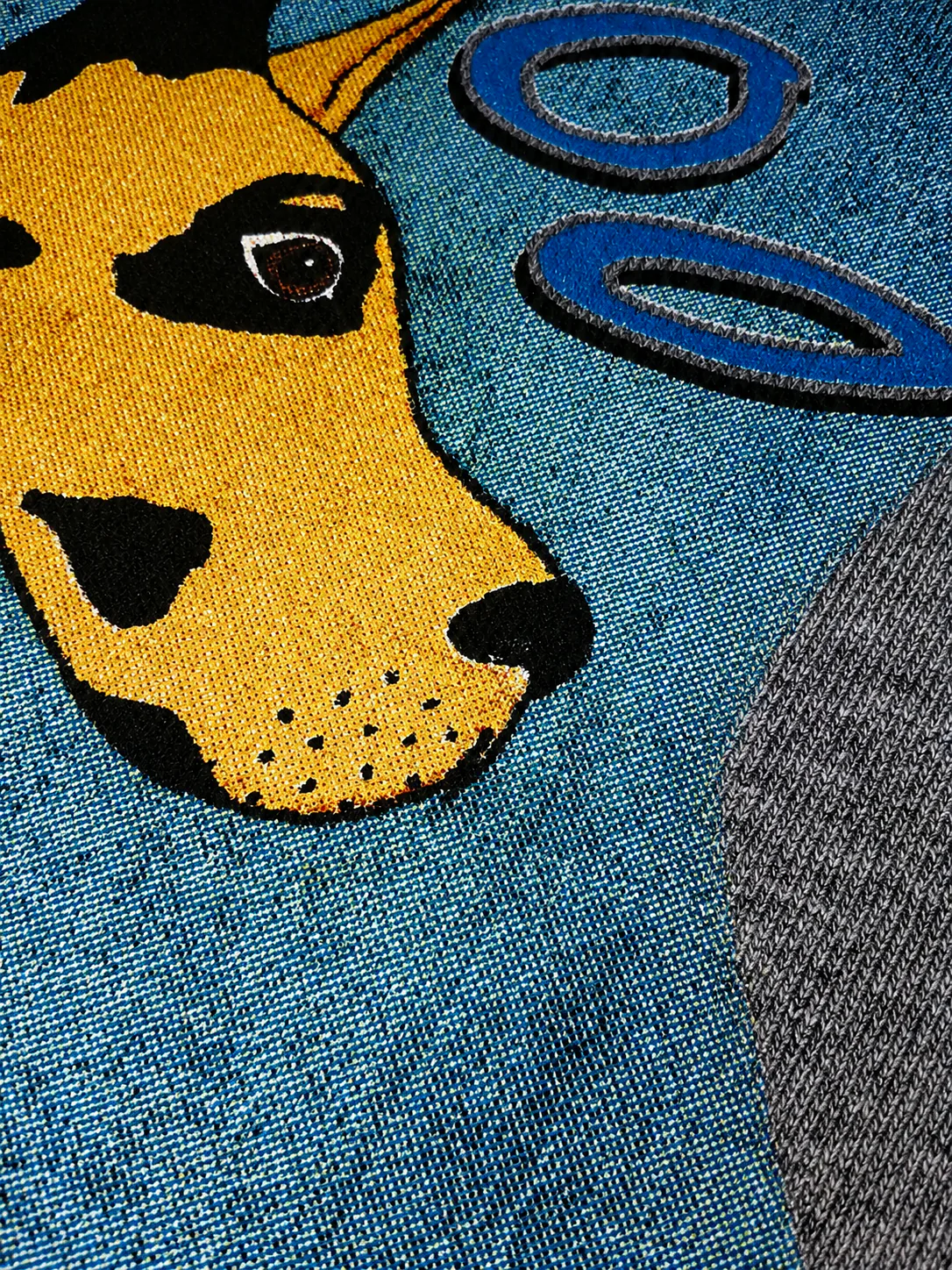
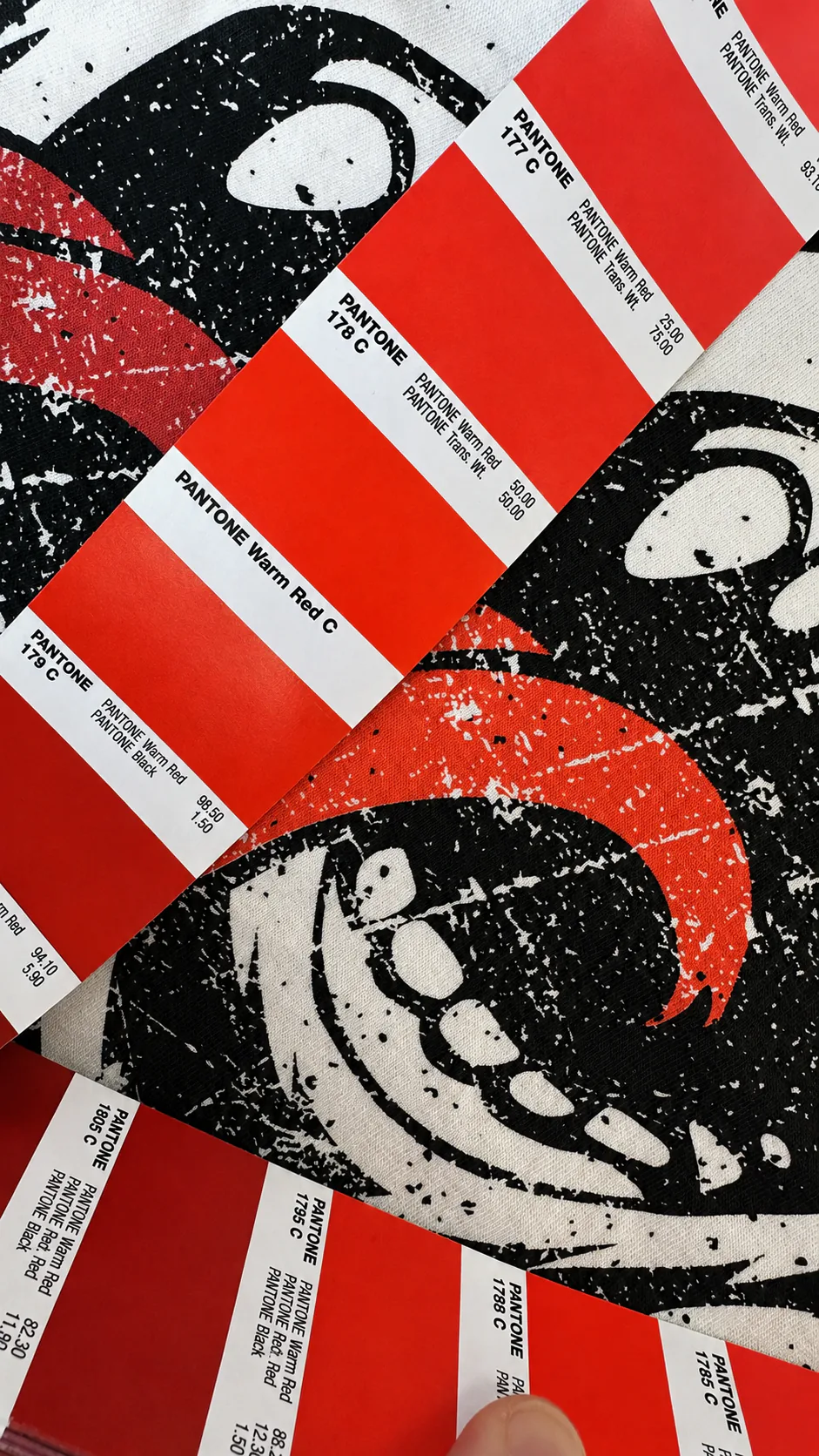 Color review provides accuracy to ensure your apparel is decorated properly.
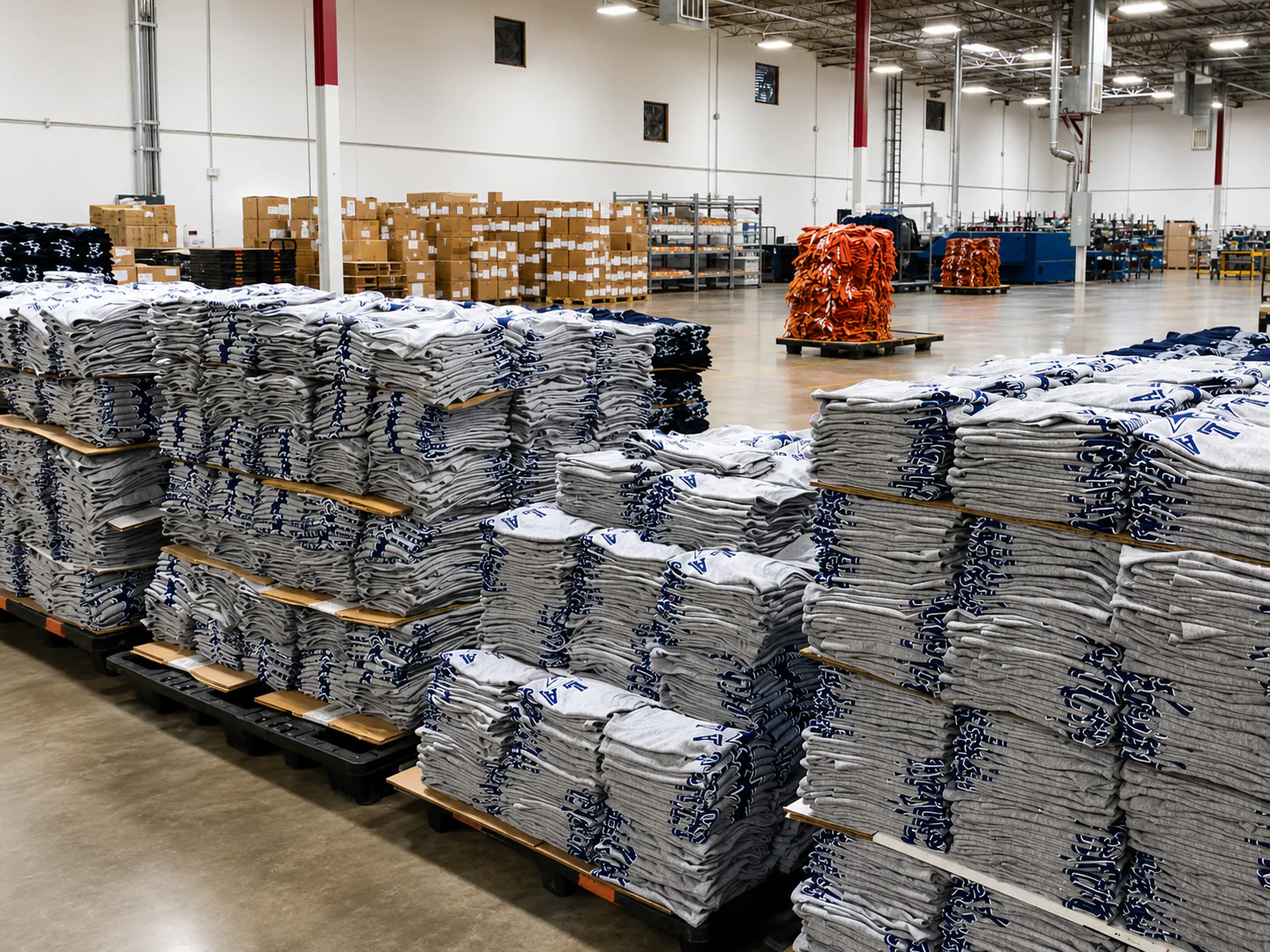
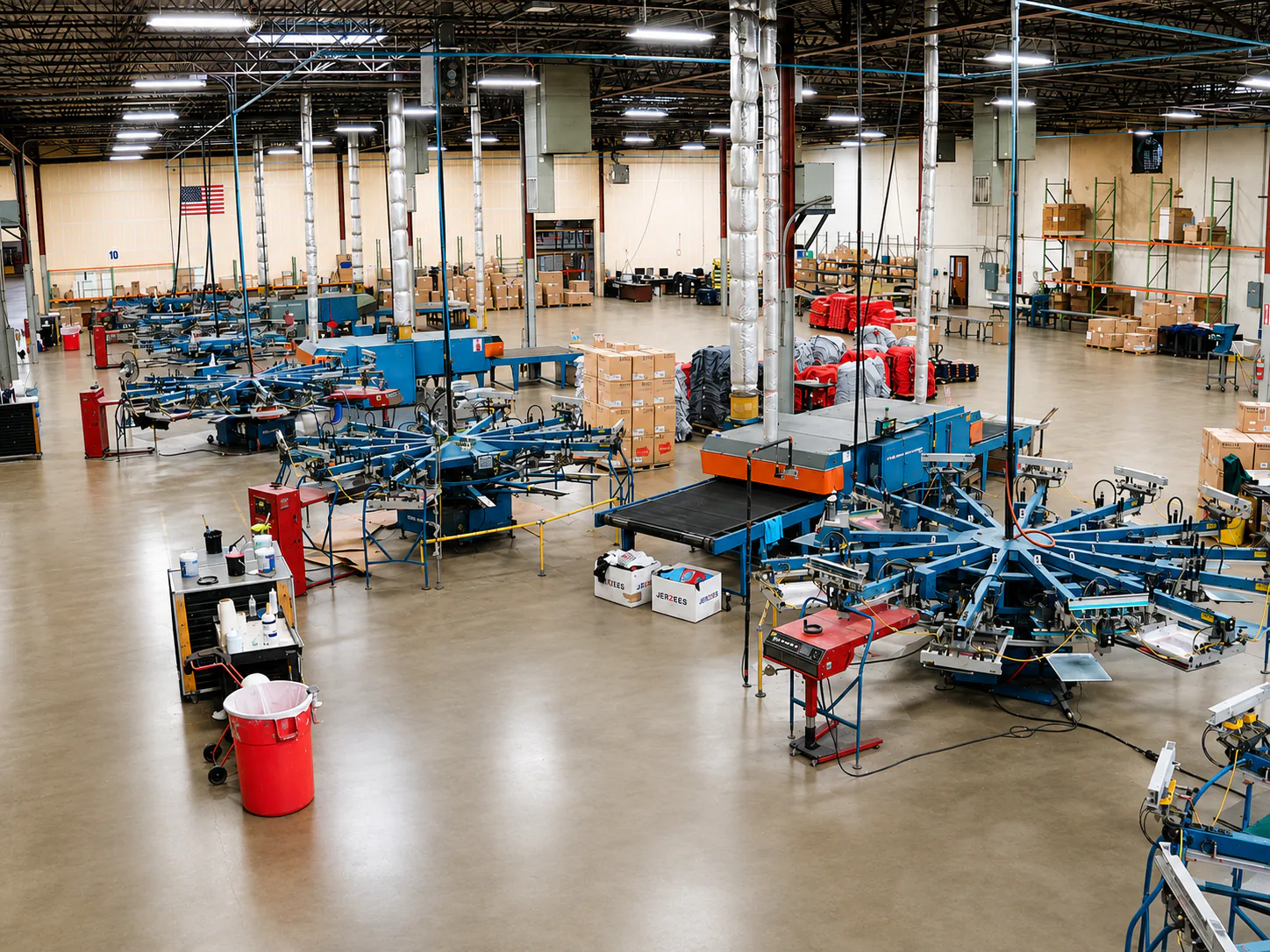 Overview of production floor.
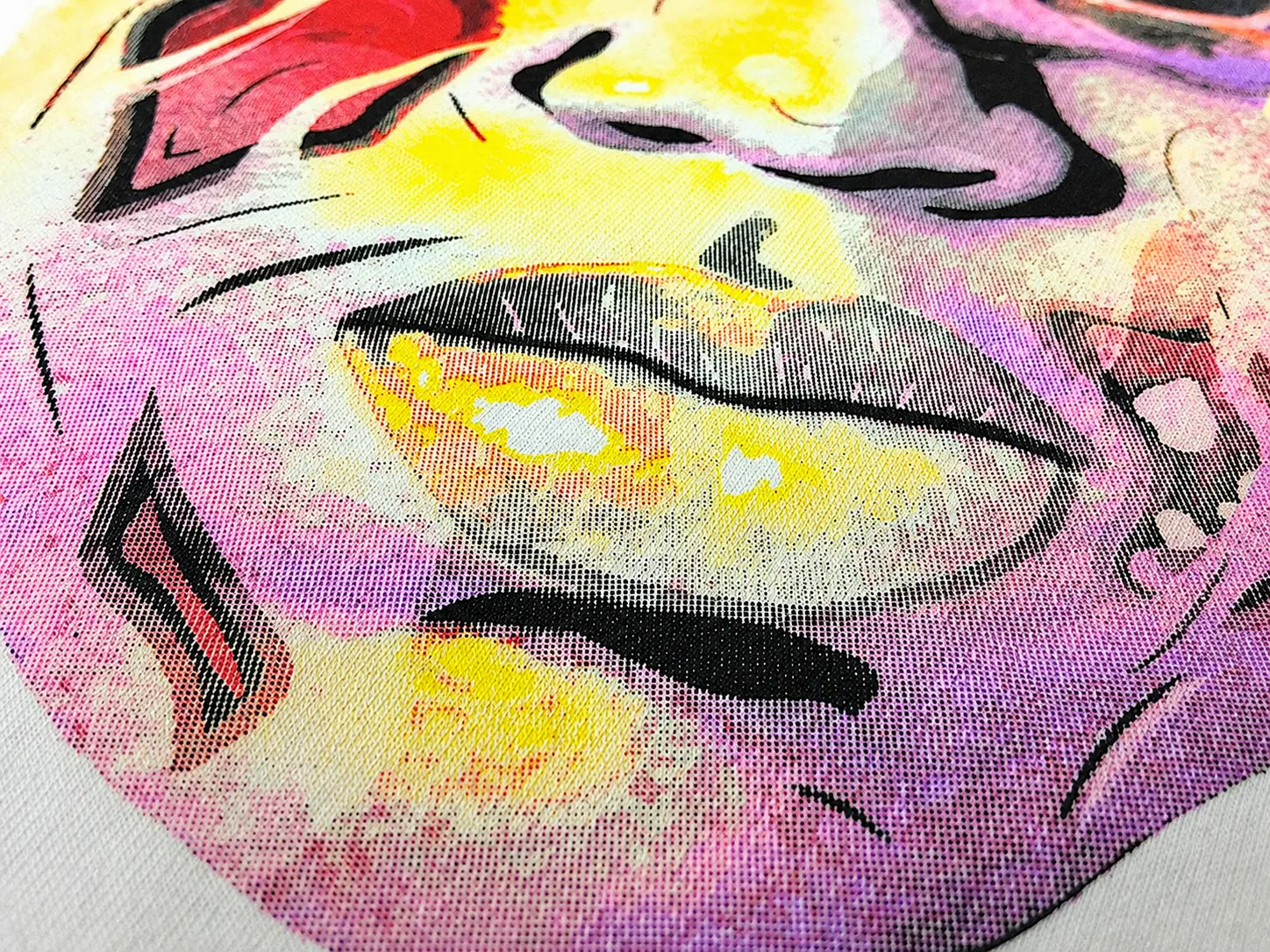
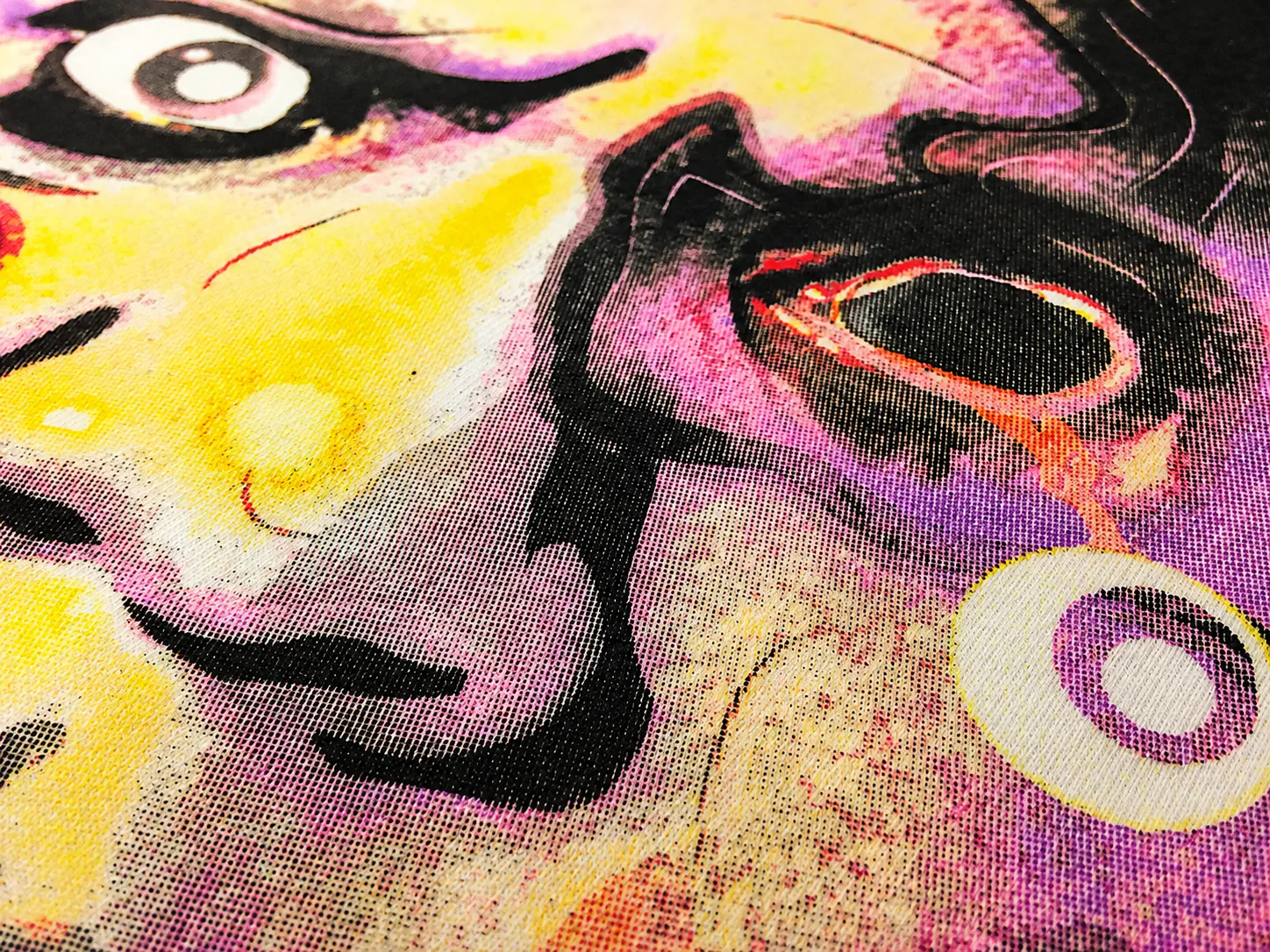 Detailed screen-printing color and registration.
Overview
Contract screen printing is a major part of the Impress Designs operation, but it is not the only way customers work with the team. The same production systems support direct brands, distributors, managed programs, and established organizations with recurring or high-volume requirements.
Impress Designs began printing apparel in 1977. The current operation connects production-aware artwork, separations, laser-to-screen exposure, printing, quality control, finishing, and distribution under one accountable team.
The process is selected around the garment, artwork, color requirements, run size, end use, and repeatability the program requires. Standard spot-color work and high-detail process printing are evaluated differently because the right result starts before an order reaches the press.
Capabilities & scope
Production buyers can evaluate the methods, controls, applications, and related finishing work together rather than treating each printing technique as an isolated service.
Repeatable color, placement, garment loading, and production controls for everyday contract and program work.
Photographic-style reproduction on dark garments using an underbase and a multi-color separation, commonly eight or more colors.
CMYK process printing for photographic work on white garments, with spot colors available where solid coverage improves the finished graphic.
Soft-hand printing options used for retail-oriented garments. Discharge removes garment dye to create an especially soft result and requires fabric-specific evaluation.
Special-format jobs and select non-textile substrates can be evaluated. Rigid vinyl, coated paper, card stock, synthetic stocks, styrene, and plastics require samples, testing, and production approval.
Full custom and vanity-label approaches can combine garment relabeling with direct printing while preserving required size, care, fiber, and RN information.
Adult, youth, and other artwork sizes require separate production files and screens. Program planning can coordinate those versions under one purchase-order strategy.
Direct laser-to-screen exposure removes film and carrier-sheet steps before press setup, supporting controlled output and registration.
Automatic reclaim equipment supports in-house screen cleaning and preparation as part of the repeat-production workflow.
Operating model
Review the garment, artwork, placements, quantities, size range, deadline, and destination requirements.
Select the print method, ink system, separations, underbase strategy, and screen specifications.
Confirm samples or approvals where the material, artwork, or application requires testing.
Schedule production, quality control, finishing, packing, and distribution as one connected order.
Requirements & controls
Customer fit
A partner that stays ahead