

Company stores
Ongoing or seasonal employee and organization programs with defined assortments, eligibility, payment, reporting, and fulfillment rules.
Programs & technology
Company stores, pop-ups, public retail ecommerce, contract production, systems integration, decoration, inventory, fulfillment, tracking, and reporting can work as one continuing program.
Programs in motion
Products, inventory, decoration, finishing, and distribution stay connected to the rules that make each program work.
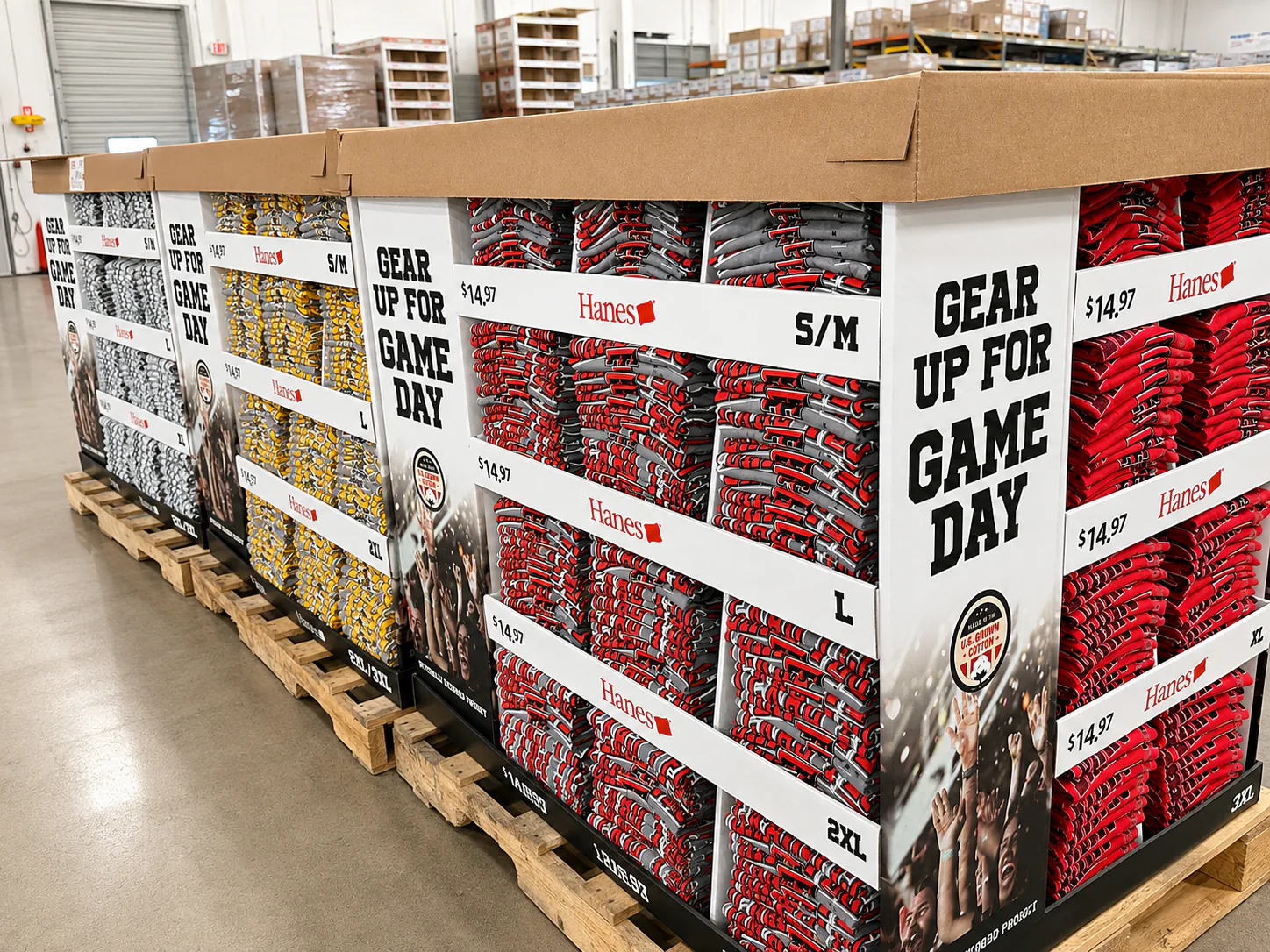 Retail-ready product prepared for distribution.
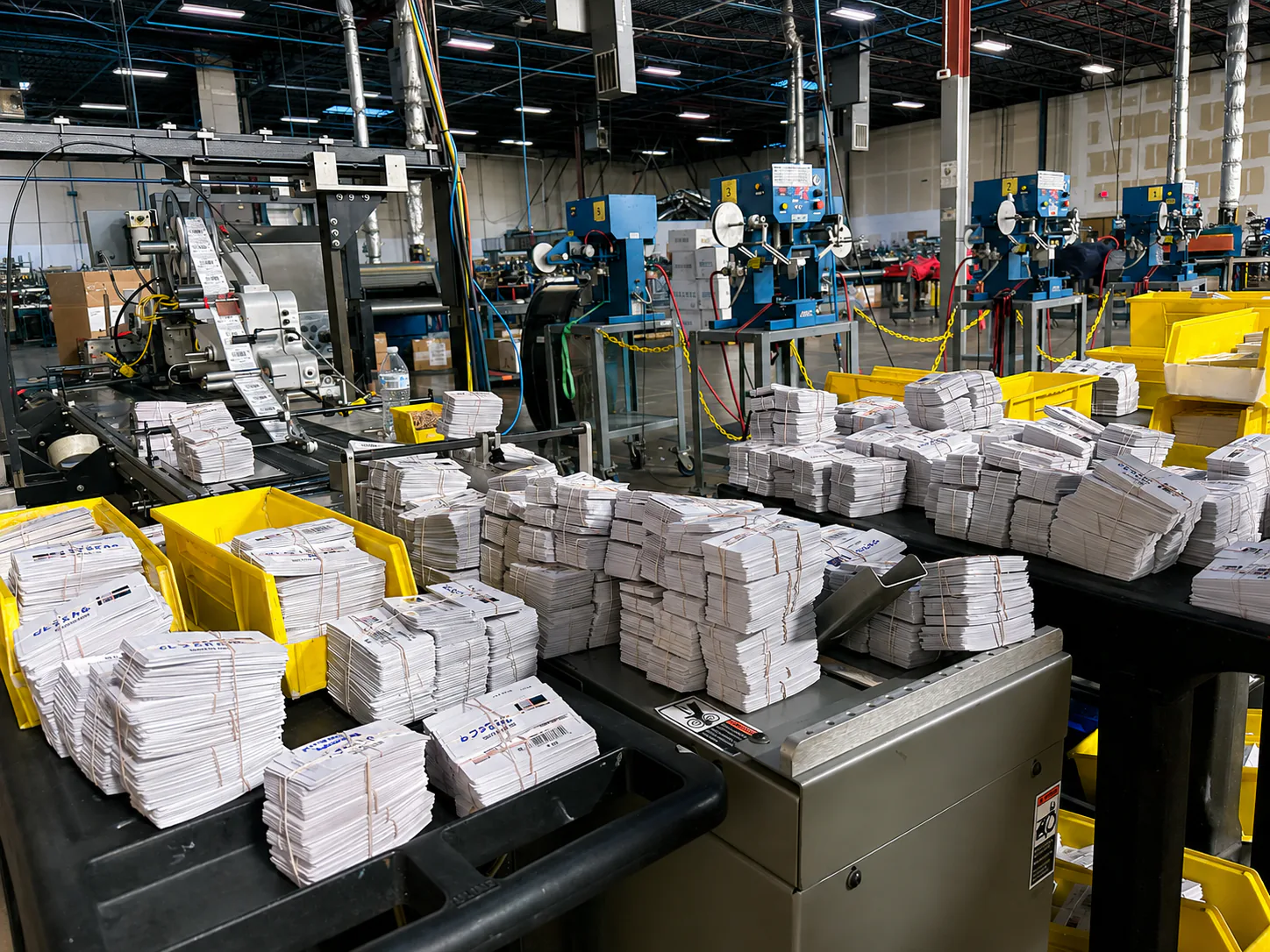 Finishing and packing remain connected to production.
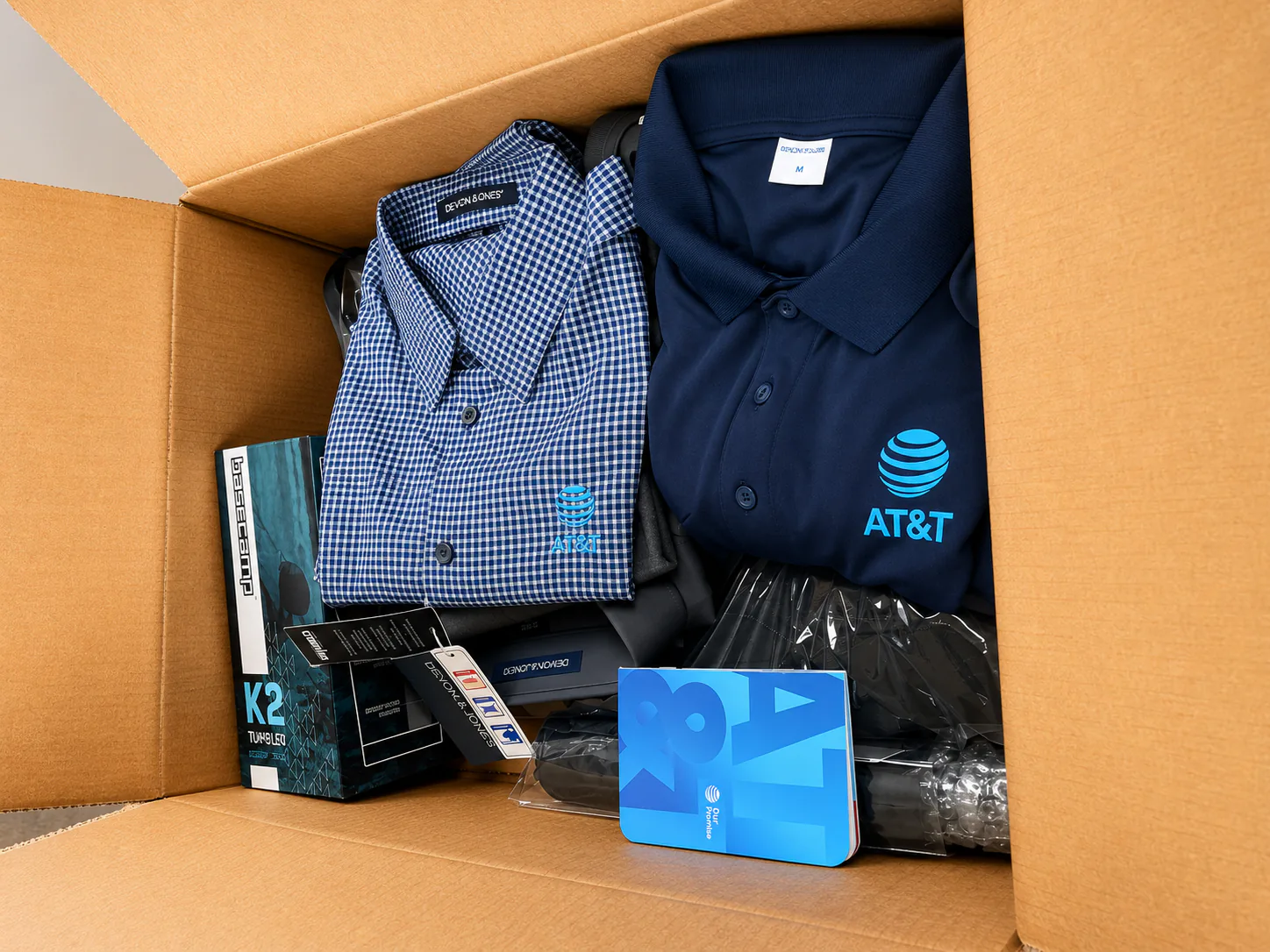 A complete branded kit prepared for its recipient.
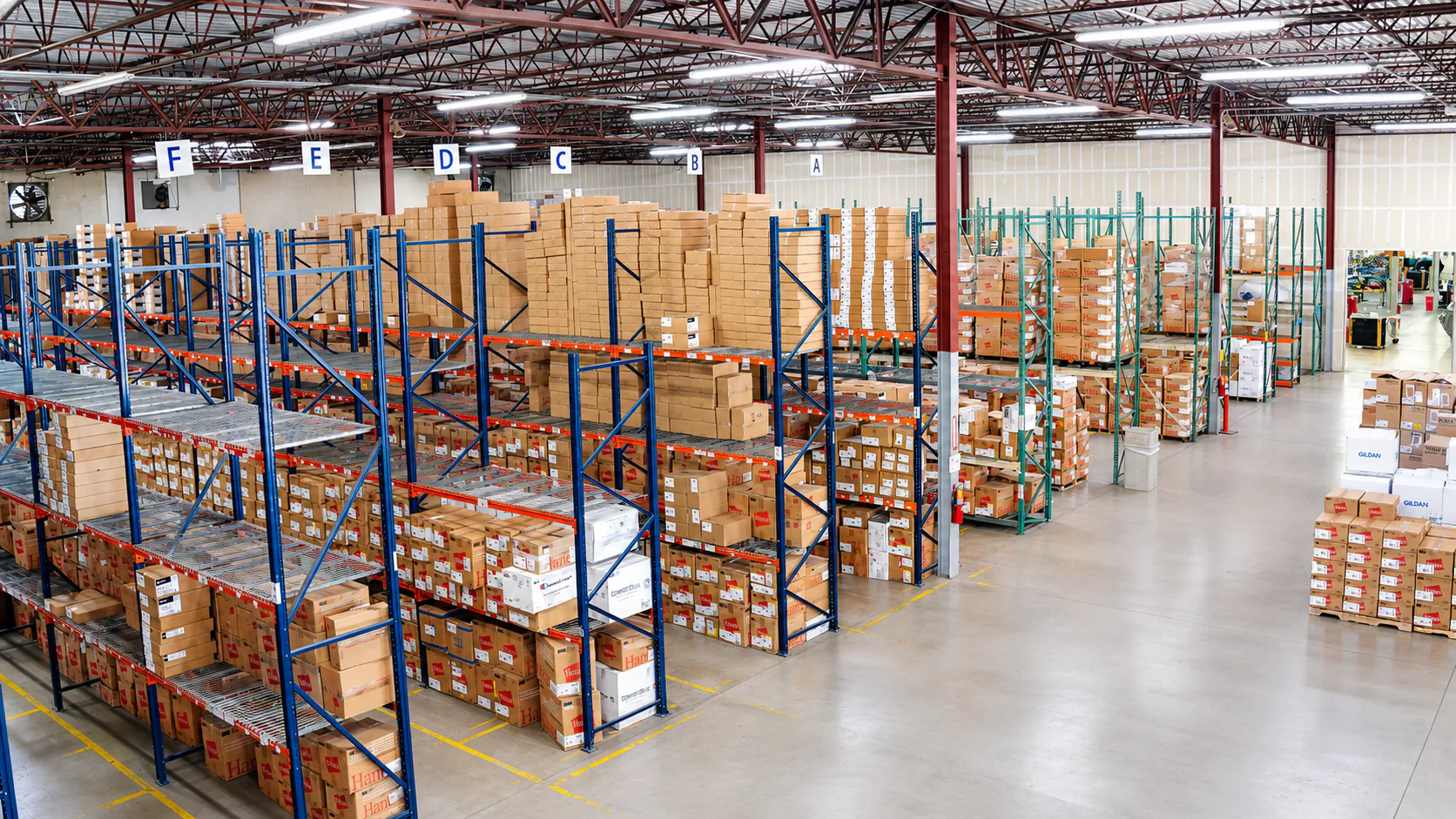 Organized warehouse capacity for continuing programs.
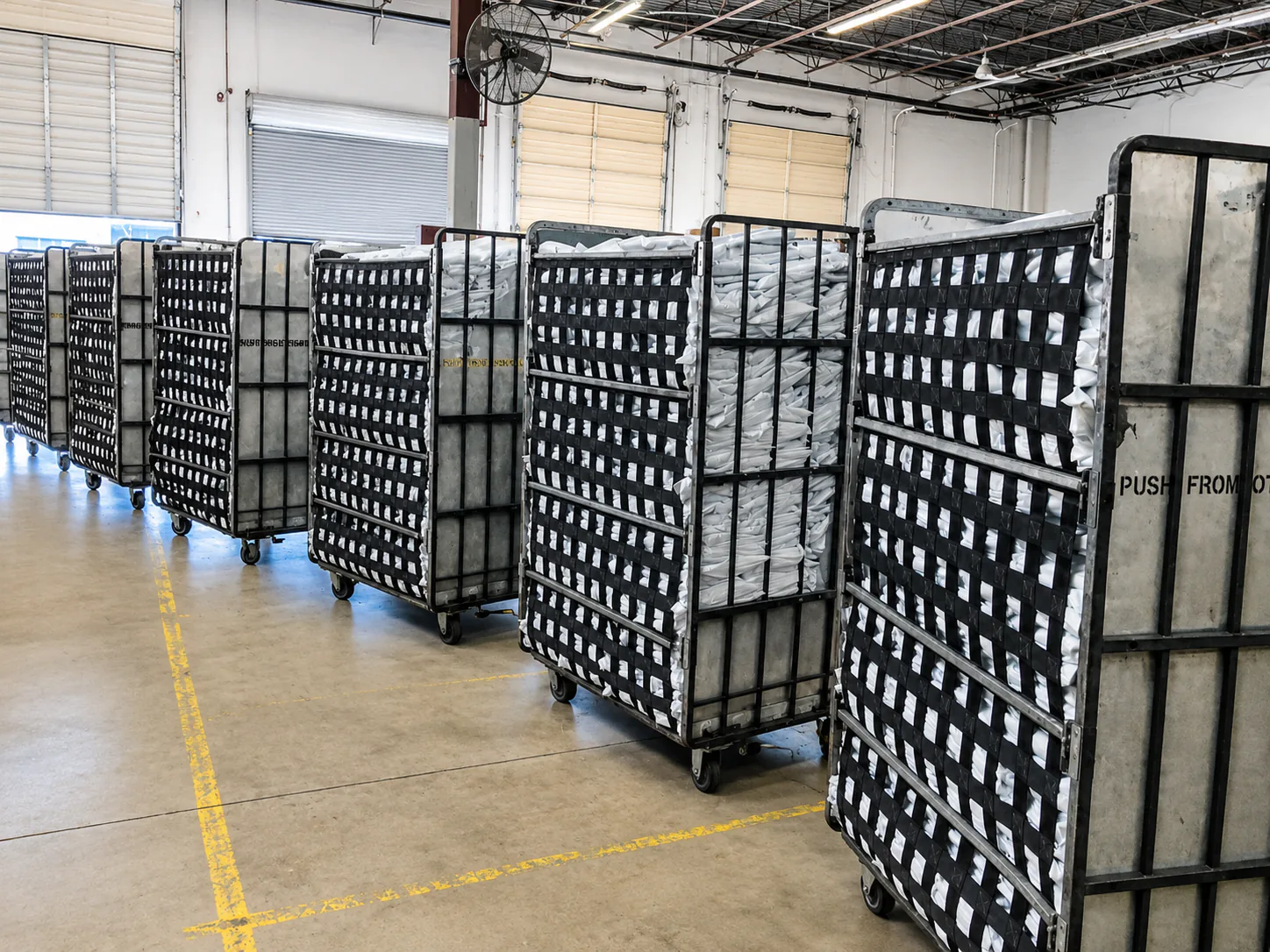 Packed orders staged for the next fulfillment step.
Managed store models
A store does not have to include decoration. Impress Designs can manage decorated apparel, customer-owned merchandise, sourced products, and third-party goods in the same program.
Ongoing or seasonal employee and organization programs with defined assortments, eligibility, payment, reporting, and fulfillment rules.
Time-bound launches, events, rewards, and limited releases with program-specific access, codes, points, deadlines, and distribution.
Consumer-facing stores for brands selling stocked, on-demand, or hybrid assortments through a managed operating model.
Simple order forms
Impress Designs can provide a quick, simple web form to collect orders, sizes, and color choices from employees or participants before you finalize the order.
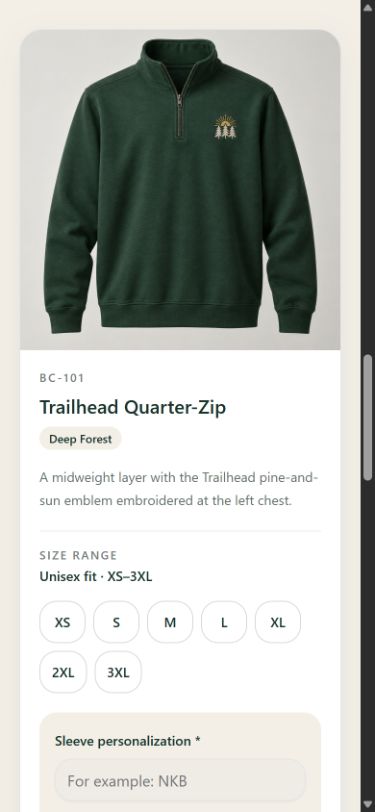 View the sample form (opens in a new tab)
Complete store operations
Impress Designs can support store setup, product management, payments, branded customer service, returns, reporting, settlements, inventory, decoration, and fulfillment. The exact responsibilities are defined by the commercial agreement and by which party sells to and supports the shopper.
Product & inventory models
The operating and billing model follows product ownership—not a one-size-fits-all storefront template.
Brands import or produce their own custom items, ship them to Impress Designs in bulk, retain ownership, and release them for storage, decoration, or fulfillment.
For established wholesale products, Impress Designs can order the blanks and invoice the goods, decoration, and fulfillment together.
A single program can combine owned inventory, sourced blanks, decorate-on-demand products, finished merchandise, and items that require no decoration.
Systems integration
Order, status, shipment, and tracking data can move through an established platform or a customer-specific workflow. Inventory reporting currently follows the agreed program cadence while automated visibility is being developed.
As a ShipStation 3PL partner, Impress Designs can receive approved orders from connected Shopify and other customer stores, then return order and tracking information through the established workflow.
Customer-specific APIs can receive standardized ecommerce orders and return status, shipment, and tracking data according to the agreed technical design.
Bulk CSV and other controlled file exchanges support programs that do not need a custom API, including large recurring distribution events.
Program pricing, product structures, production planning, account service, decoration, finishing, and distribution are configured around anticipated volume and operating requirements.
Review programImpress Designs can build and manage company stores, pop-up stores, and public retail stores using stocked goods, decoration on demand, or hybrid inventory—including programs that require no decoration.
Review programWhite-label stores give distributors and resellers control of the brand, assortment, pricing, promotions, and customer direction while production and fulfillment operate behind the scenes.
Review programStore setup, products, promotions, payment, decoration, inventory, customer communication, packing, shipping, tracking, and returns can operate as one managed program.
Review programShopify, ShipStation, custom APIs, and structured order files can reduce manual entry and connect ecommerce orders, status, shipping, tracking, and reporting.
Review programApproved products and artwork can stay available in a pop-up or year-round store, then move through decoration, quality control, packing, and shipment after purchase.
Review programProgram design
Enterprise programs fail when the storefront, production floor, warehouse, carrier, and customer service team operate from different assumptions.
Define products, artwork, inventory, order sources, payment, customer service, returns, reporting, and ownership before selecting technology.
On-demand work uses established products, logos, placements, and production rules. Basic DTF or embroidery personalization can be added when the program does not require a new approval.
Decoration, finishing, inventory, fulfillment, tracking, and program support follow the same documented rules and accountability structure.
Program discovery